
Churches in Philadelphia run the gamut, at least when it comes to architecture. Some old churches are nothing more than repurposes rowhomes, unassumingly blending in with their neighbors. Others are extremely ornate and are firmly considered a part of the city’s rich architectural history. One church that fits firmly into the latter camp is the historic 19th Street Baptist Church, a property that we’ve covered a couple times over the years.

This building, which sits at the southeast corner of 19th & Titan, was originally constructed in 1874-75 as the Memorial Church of the Holy Comforter. Legendary architects Furness & Hewitt handled the design for this High Victorian building, making the unusual and striking choice to use green serpentine for much of the facade. The current congregation moved here in 1944, but has not used the property for years, for obvious reasons.

We first covered this property way back in 2011, when L&I cited the building for being imminently dangerous and warned that the City could demolish the building if the owners did not resolve its structural issues. When we next visited in 2014, we told you that the church has procured funds to make the most immediate repairs, but would still need $2-3 million to properly restore the historic edifice. Last year, Hidden City provided an in-depth summary of the last decade, with an unfortunate conclusion that renovation and restoration efforts would not be moving forward and that the City would be demolishing the building. And indeed, if you pass by the property today, you will see that this is exactly what’s happening.

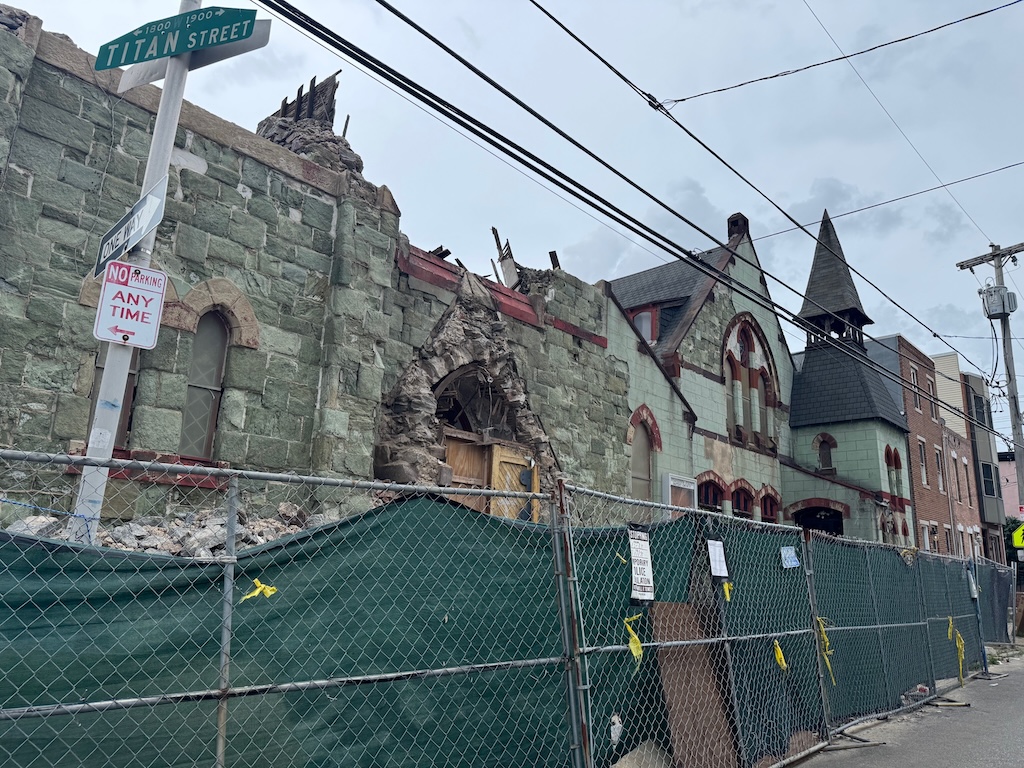
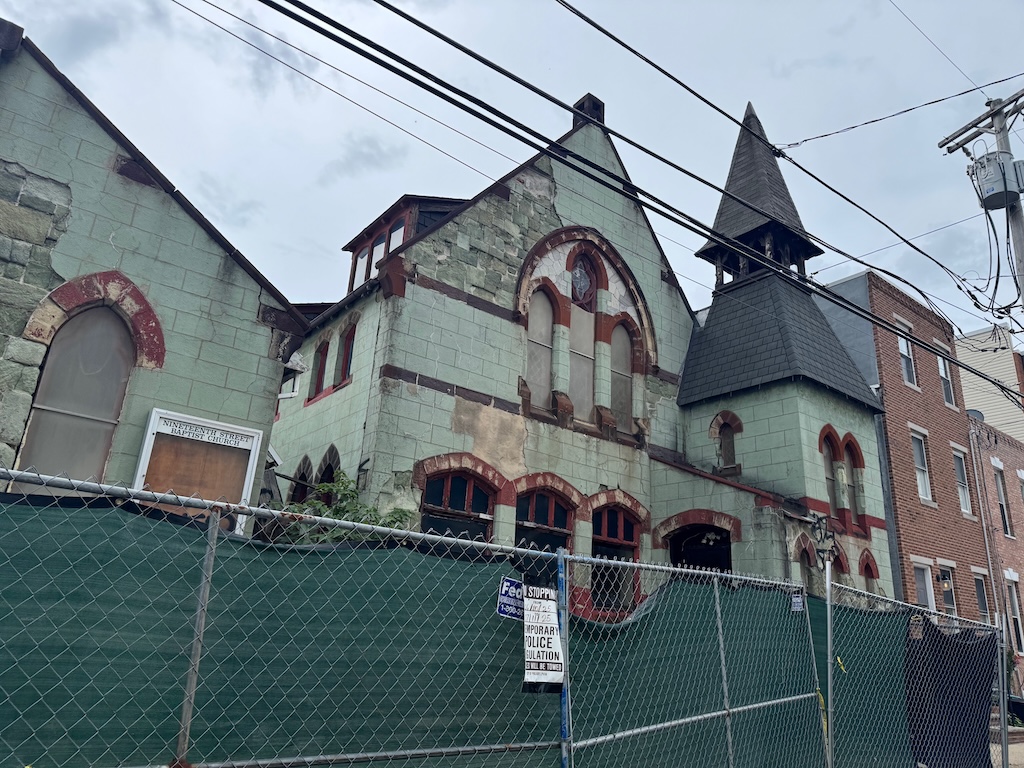
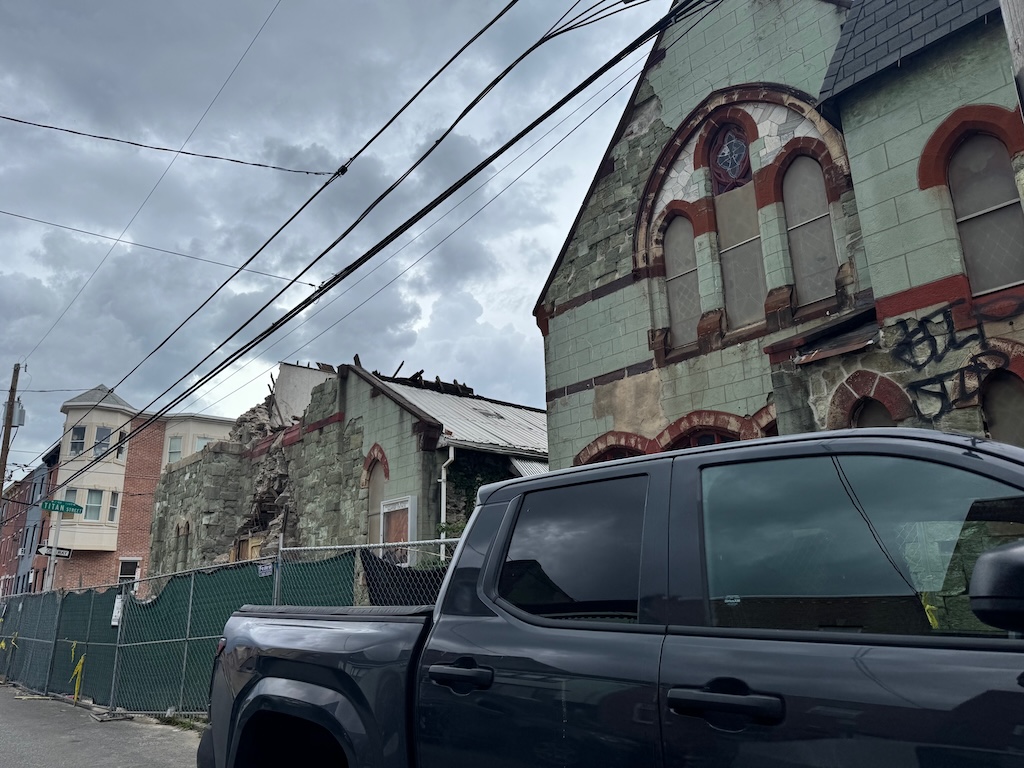
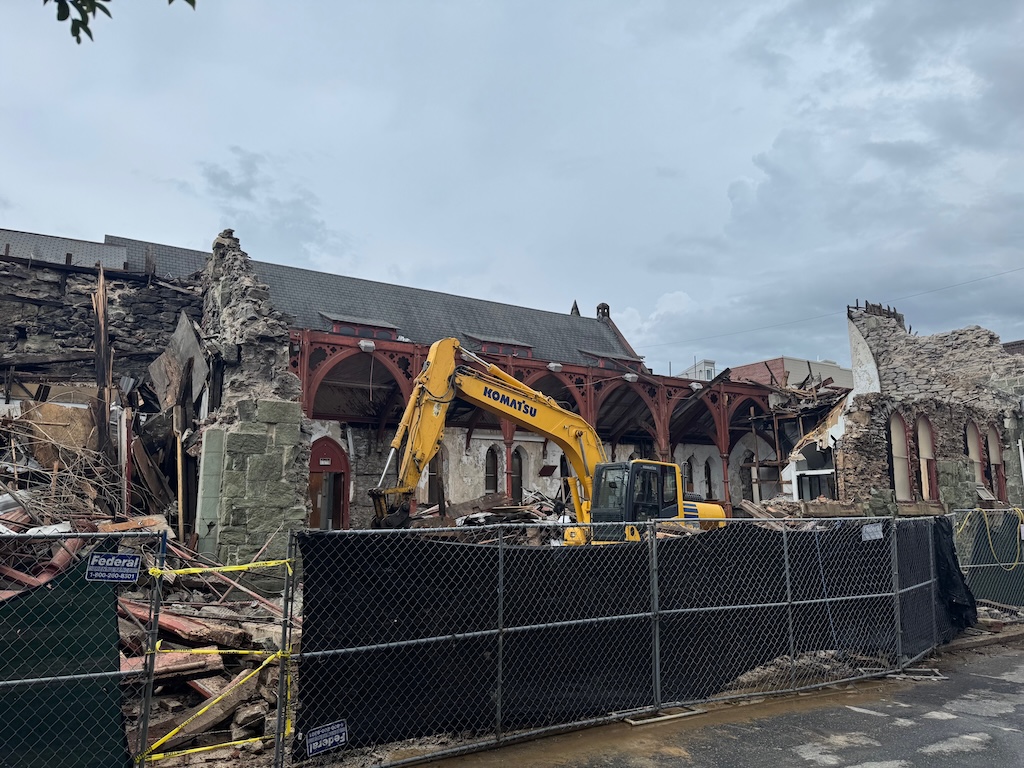
A recent Inquirer article about this property indicated that the southern Fellowship Hall section will remain, though this is not guaranteed as the church and Fellowship Hall are (were) connected and there’s not certainty that one can stand without the other. We certainly hope that the engineers are able to figure out a way for this building to stick around; even a partial preservation of this church would be better than losing it all. As for the future, we would think that the church selling the vacant land at the corner and using the proceeds to repair the Fellowship Hall section would be the best possible outcome at this point. If not, we fear that Fellowship Hall might eventually meet the same unfortunate fate as the former sanctuary.
Leave a Reply