
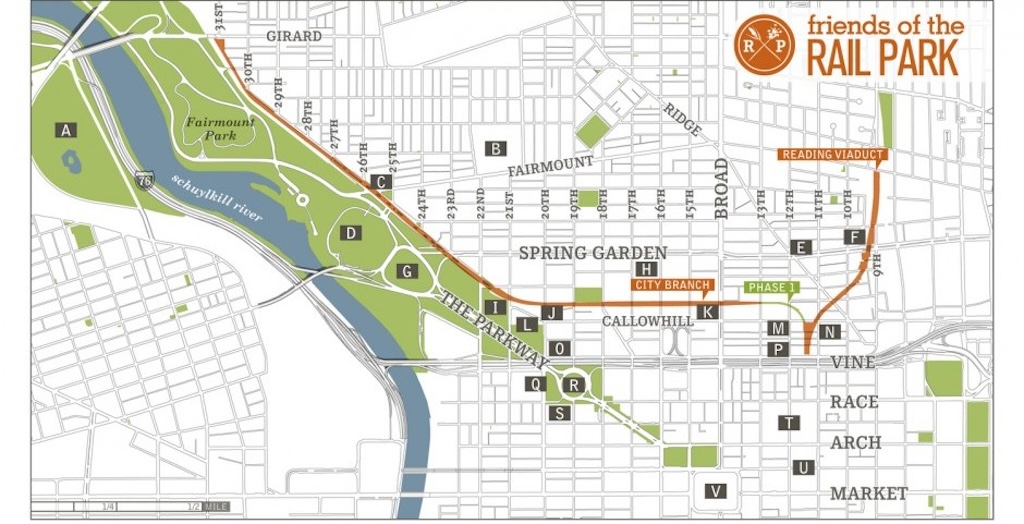
It’s hard to imagine today, but it wasn’t so long ago that Philadelphia had railroad tracks running through the heart of Center City. Broad Street Station was the city’s primary train station for decades and was located at 15th & Market, with rail lines running westward along the path of the present day JFK Boulevard. And Reading Terminal was once an actual train station, with rail lines running to the north, using the viaduct that’s currently home to the Rail Park, as well as “the Cut,” an underground rail line running between Callowhill and Hamilton Streets and eventually following Pennsylvania Avenue before crossing the Schuylkill River.
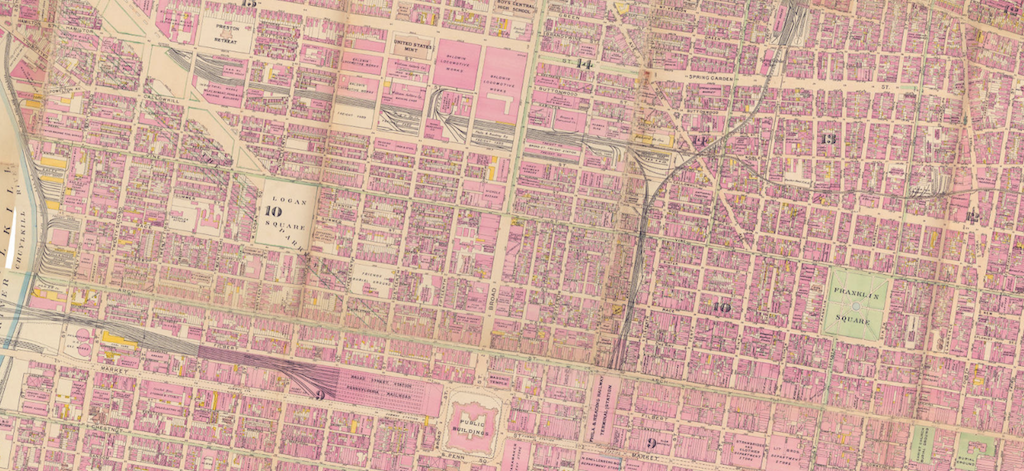
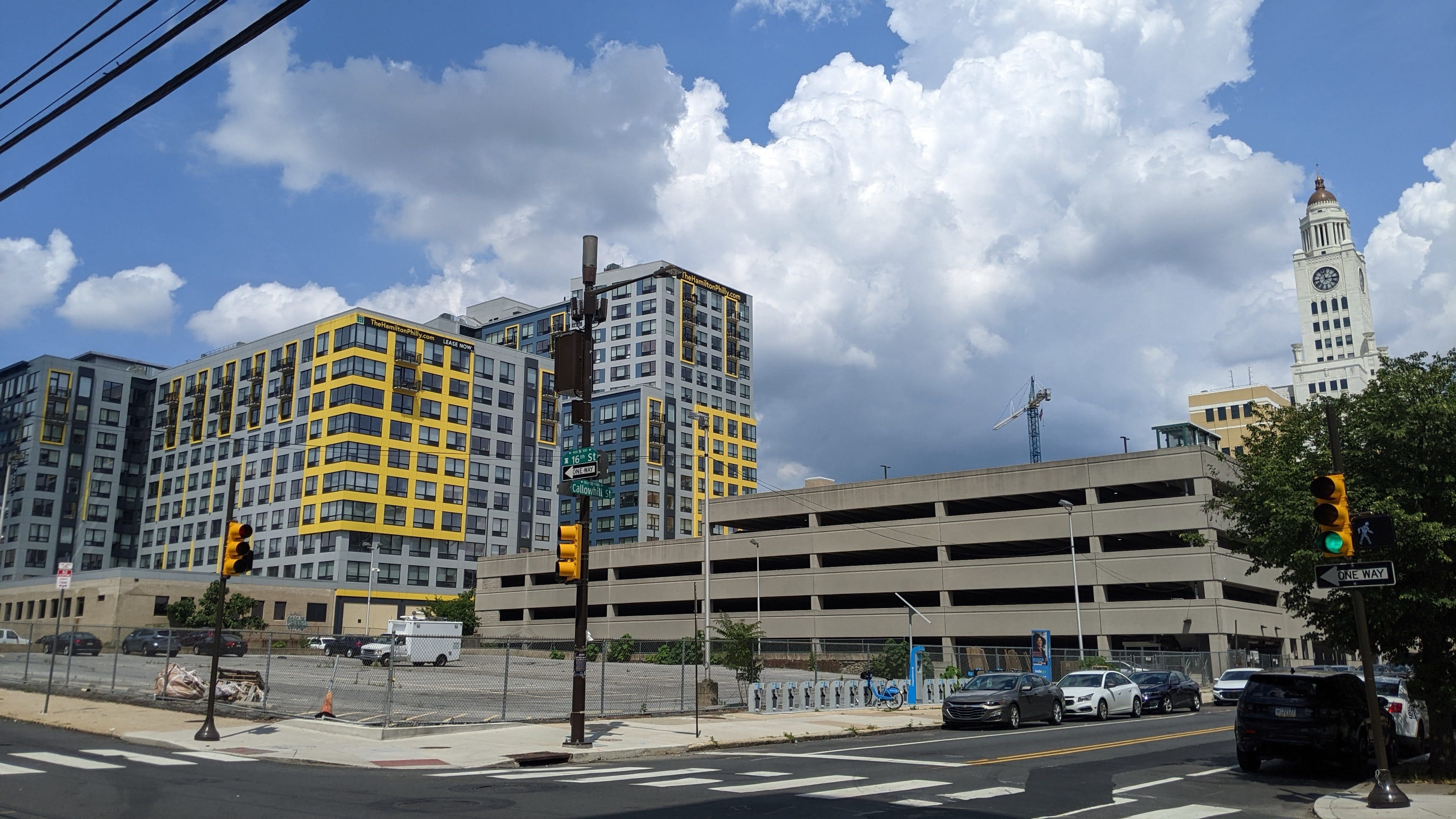
Historically, proximity to a rail line was very appealing to manufacturers and other sorts of industrial concerns. This was especially true for the Reading line that ran through the heart of what’s now the Logan Square neighborhood, though most of those old industrial buildings are now long gone. The location of the Rodin Museum, for example, was once home to an ice company and a textile mill. A locomotive works, an iron foundry, and a machine shop were once located where the CCP campus sits today. On the other hand, there are some sites, like the northeast corner of 16th & Callowhill, which have been used as a surface parking lot for generations.
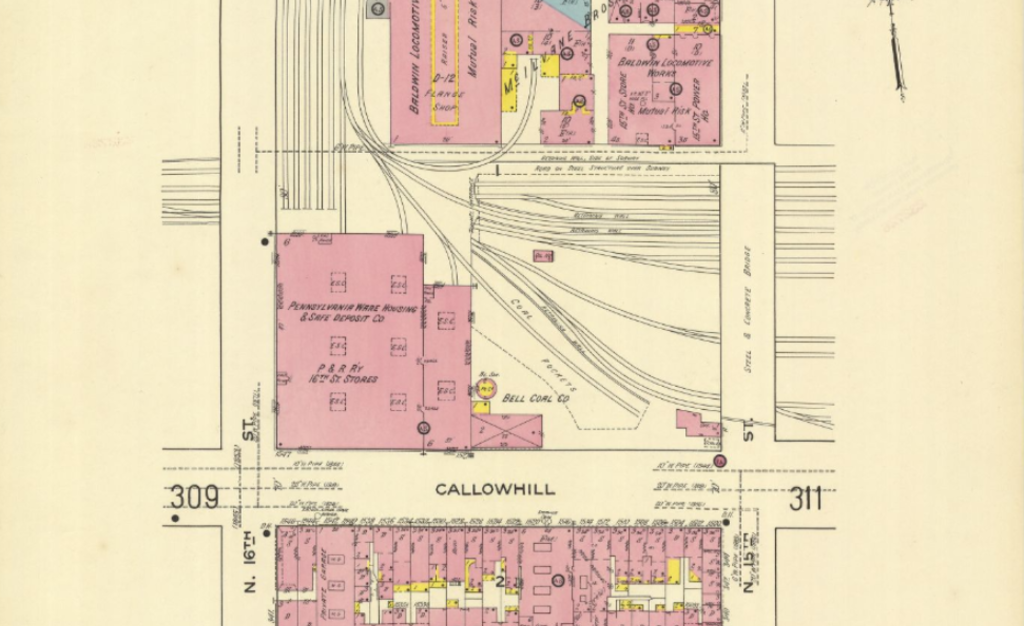
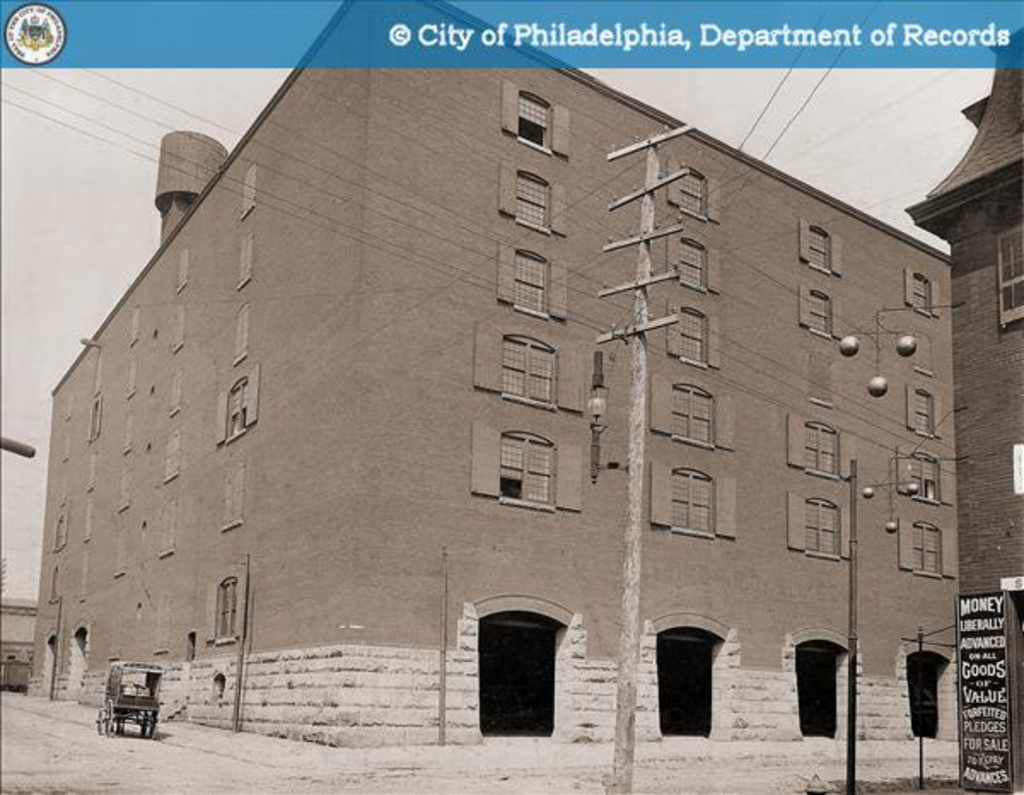
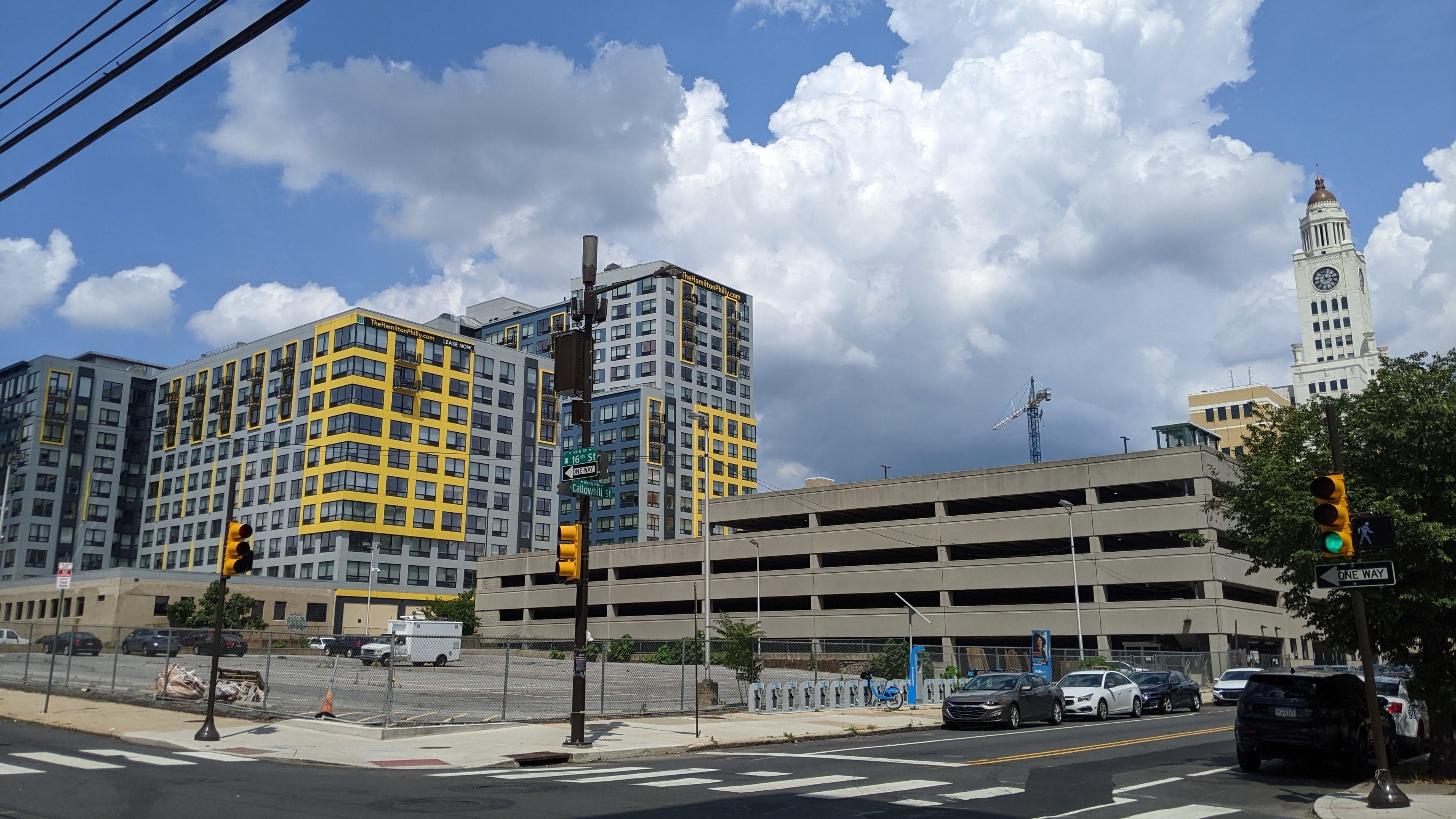
Toward the end of the 19th century, a building was constructed at this address for the Pennsylvania Warehousing & Safe Deposit Company. The many spur tracks allowed the company to quickly load and unload freight arriving and departing via rail. At some point in the mid-1900s, the building was repurposed as a factory for boilers, before ultimately succumbing to the all too common urban renewal fate of demolition and eventual use of the site for surface parking. The other side of Callowhill arguably had it worse, with several blocks totally demolished to make room for entrance and exit ramps for the Vine Street Expressway.
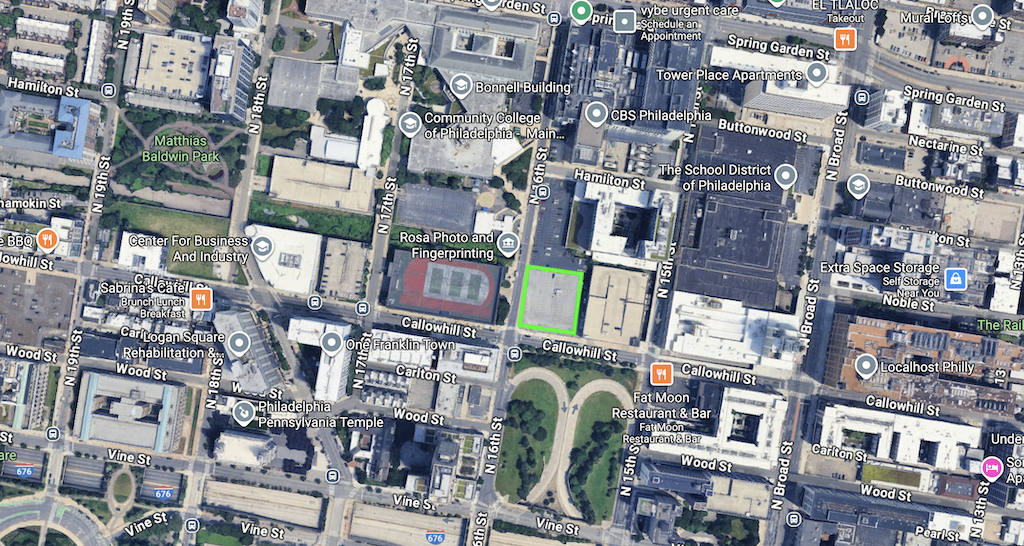
Though this property has been used for parking for decades, it appears that redevelopment is on the horizon. Given the location and the permissive zoning, one might think that developers would pursue a multi-family project with some size and density, like the Hamilton project that went up nearby a few years back. Alas, that’s not what’s coming; instead look for 30 townhomes, with 29 rising four stories and 1 lonesome three story unit in the corner of the lot.
The engineering and design plans from Colliers only include site layouts and side elevations, but we can learn plenty from the drawings, especially the site plan. The developers have gotten quite creative in laying out the site to ensure that 29/30 homes have their own garages, including four units with two-car parking. All of the garages will also have electric car chargers, which seems rather forward-thinking and environmentally responsible.
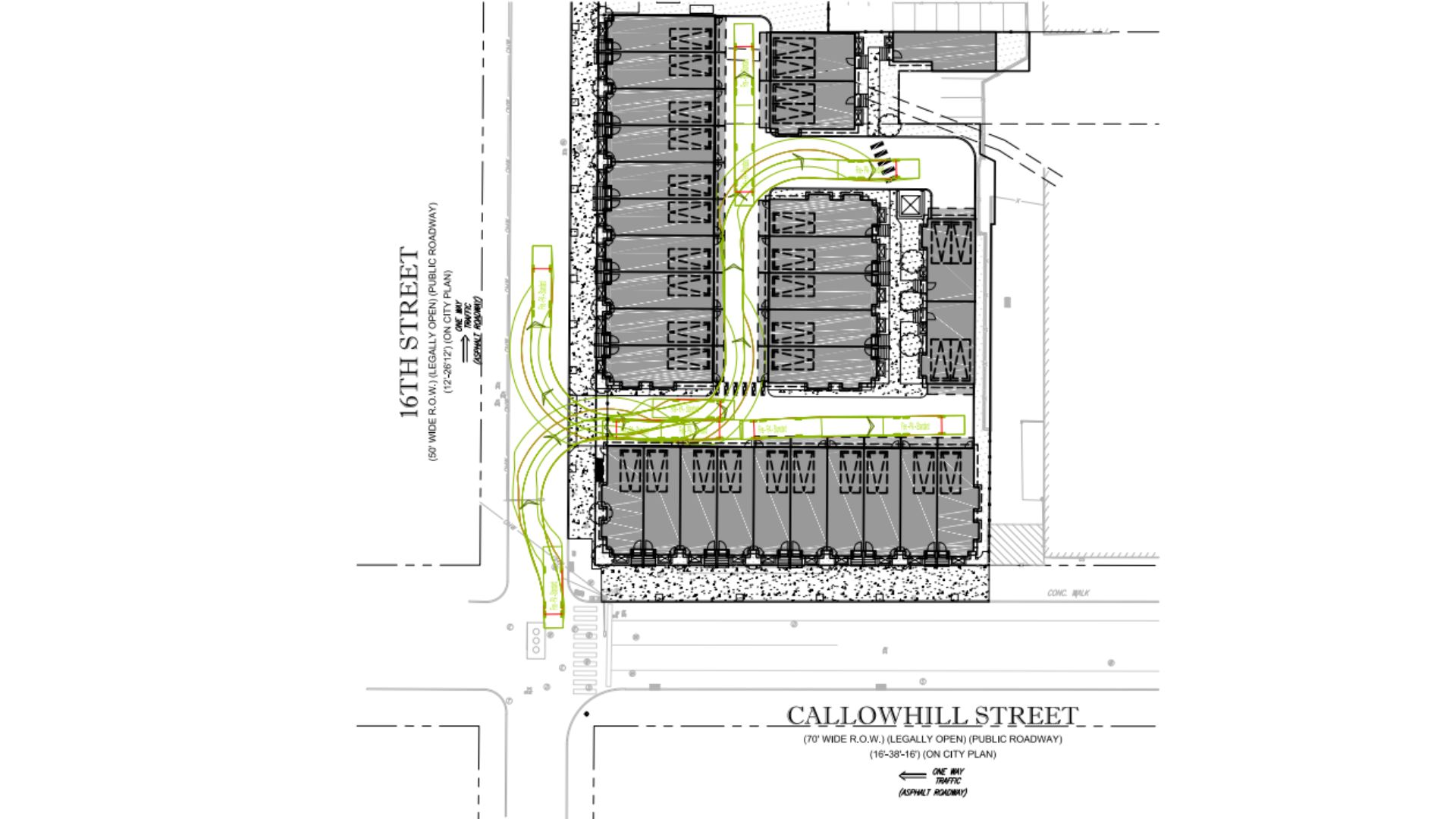
Especially with a parking garage right next door, this has been a hilarious underuse of a valuable property for so many years, so this plan is certainly a step up. On the other hand, we have to wonder whether homes are the way to go here. A taller and denser project would have been entirely appropriate at this central location. But the environment for multi-family development is not easy these days, and underwriting a townhome development is generally more possible than making an apartment building pencil out.
Be that as it may, we expect that these homes will need to be listed at high price points, and we wonder whether that will be possible so close to an entrance to I-676. This wouldn’t be nearly as much of an issue for an apartment building. But we are taking what the market gives us (not like anyone asked us, anyway). For now, we’ll hope the developers are able to come up with plans that compel a few dozen new neighbors to move into what we expect will be some fancy new homes in Logan Square.
Leave a Reply