
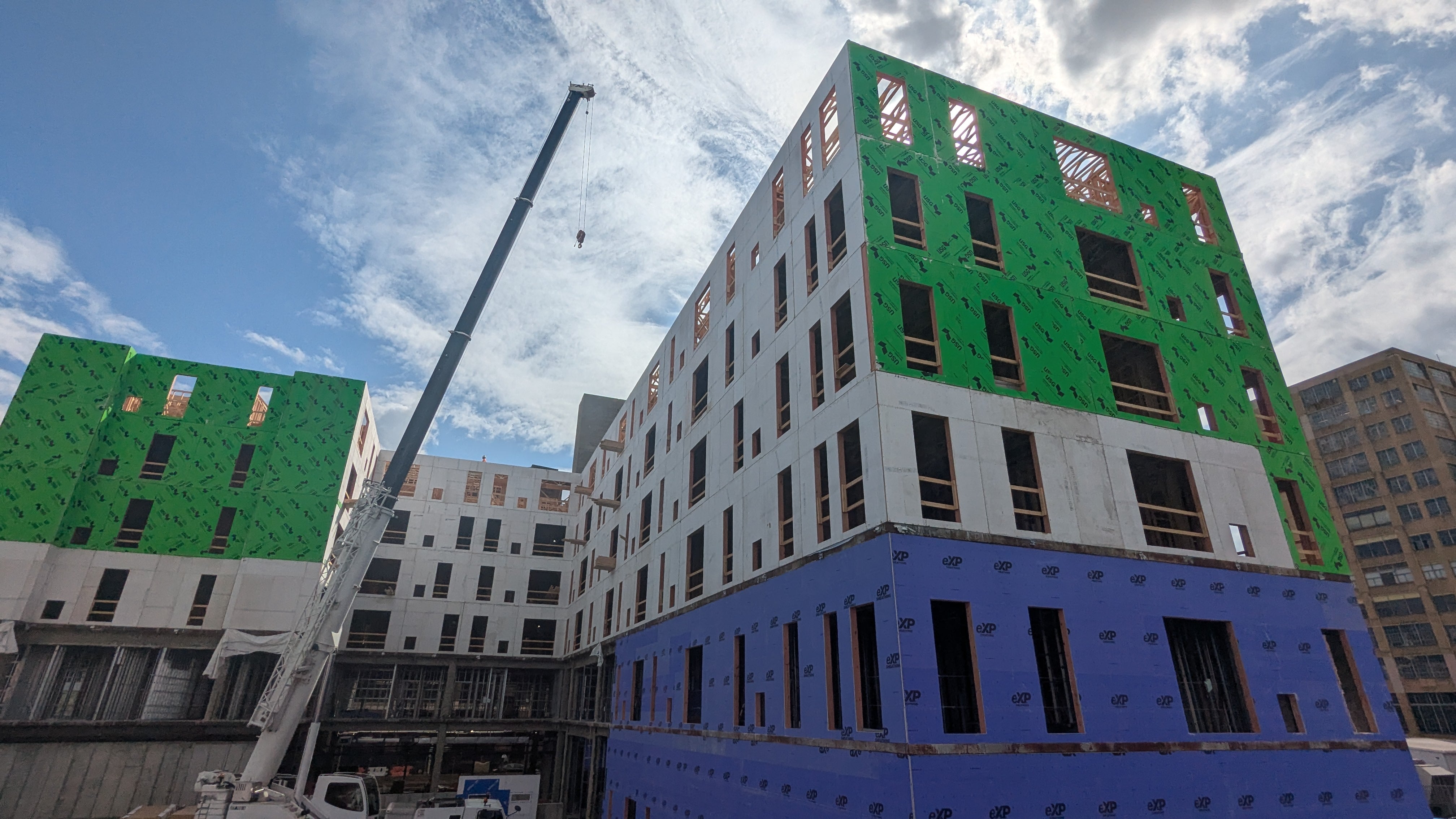
We clearly love strolling around Philadelphia checking out construction sites, and it’s especially exciting when we can view a new building from an unusual perspective. For almost every project we cover, we find ourselves standing in the street or on the sidewalk, looking up. But for projects near the Rail Park, we’re able to capture things from a different angle, about 10 feet off the ground.
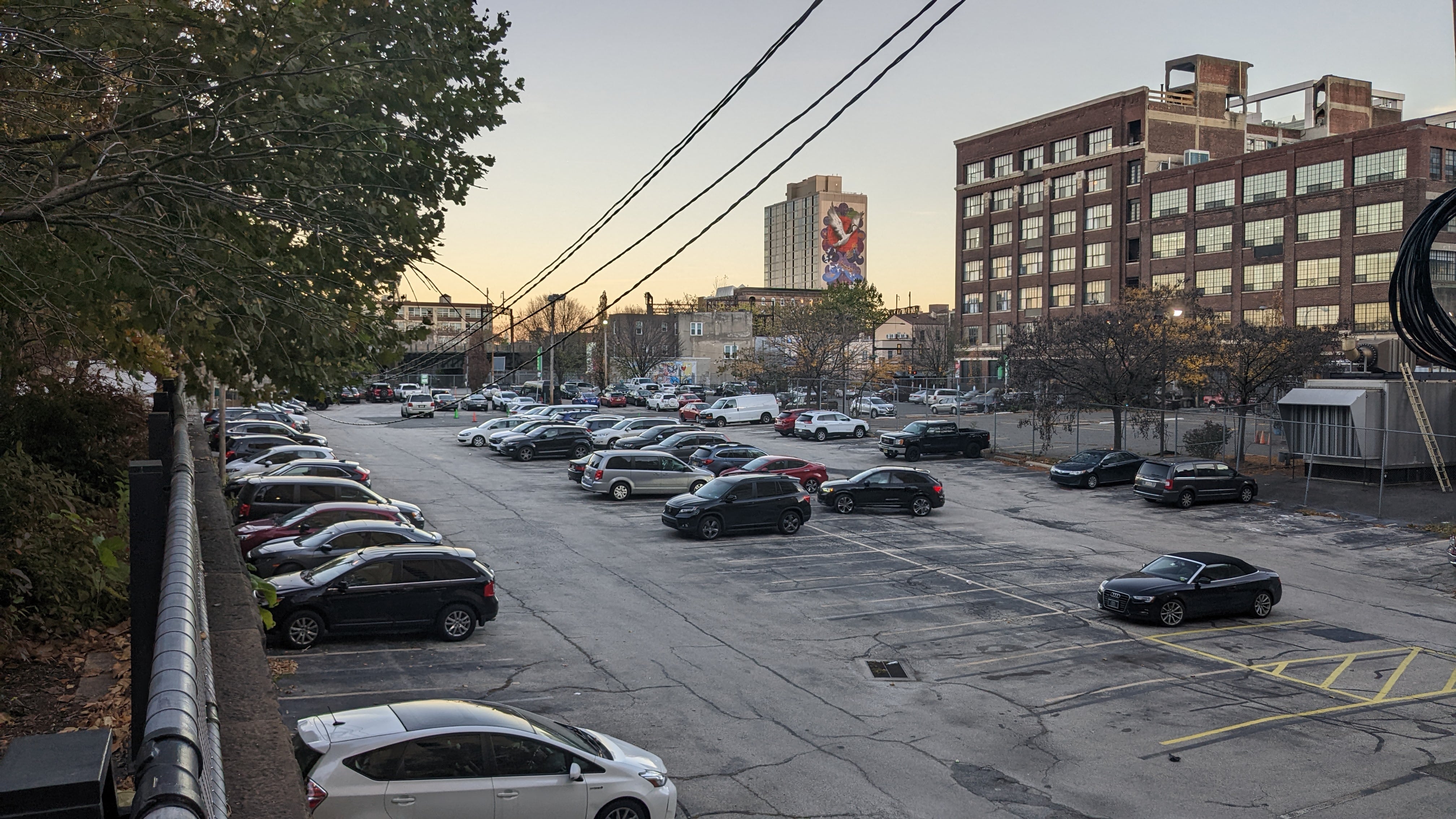
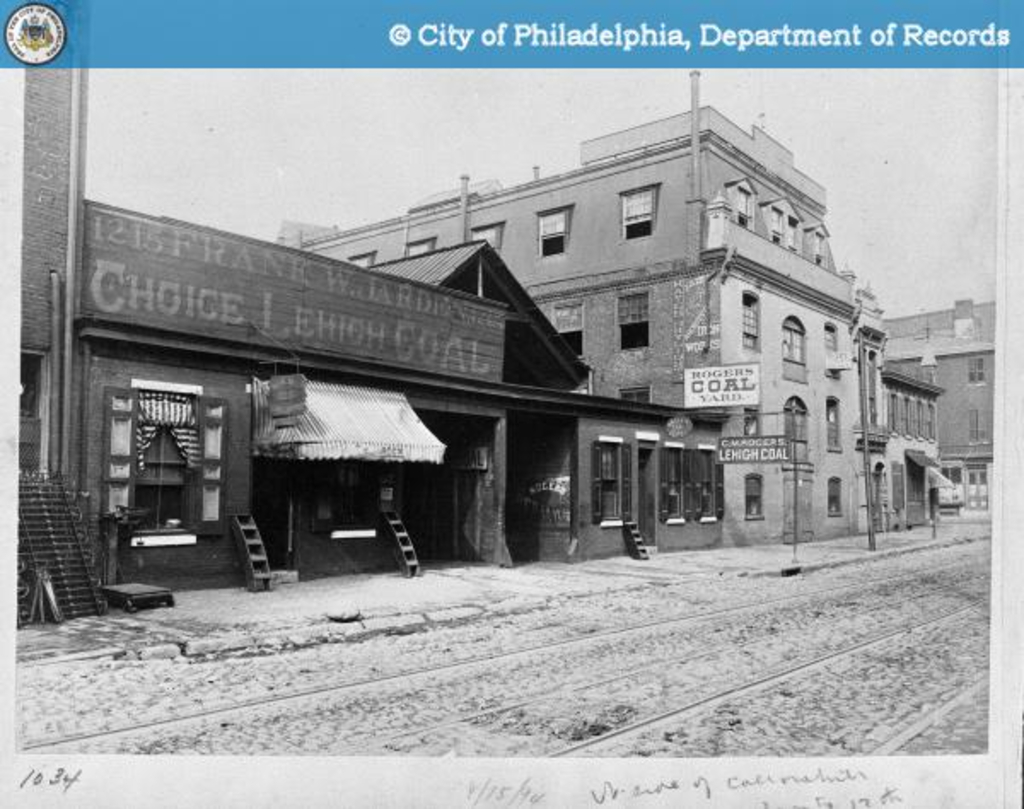
1201 Callowhill St. was historically used as a coal yard stretching all the way back to the middle of the 19th century, with the Philadelphia & Reading Railroad Broad Street Depot only a block away. In recent decades, the property was used as a surface parking lot. With the site having done the dirty job of storing coal and cars for a few generations, we are positively tickled that it’s being redeveloped.
Back in 2020, we told you to expect a project here with 65 co-living apartments, retail, and parking. That project never materialized, and a little over a year ago we told you that new owners had come forward, with a plan for 144 apartments, about 2,000 sqft of retail, and 33 underground parking spots. This project broke ground last year and is starting to round into form. Check it out:
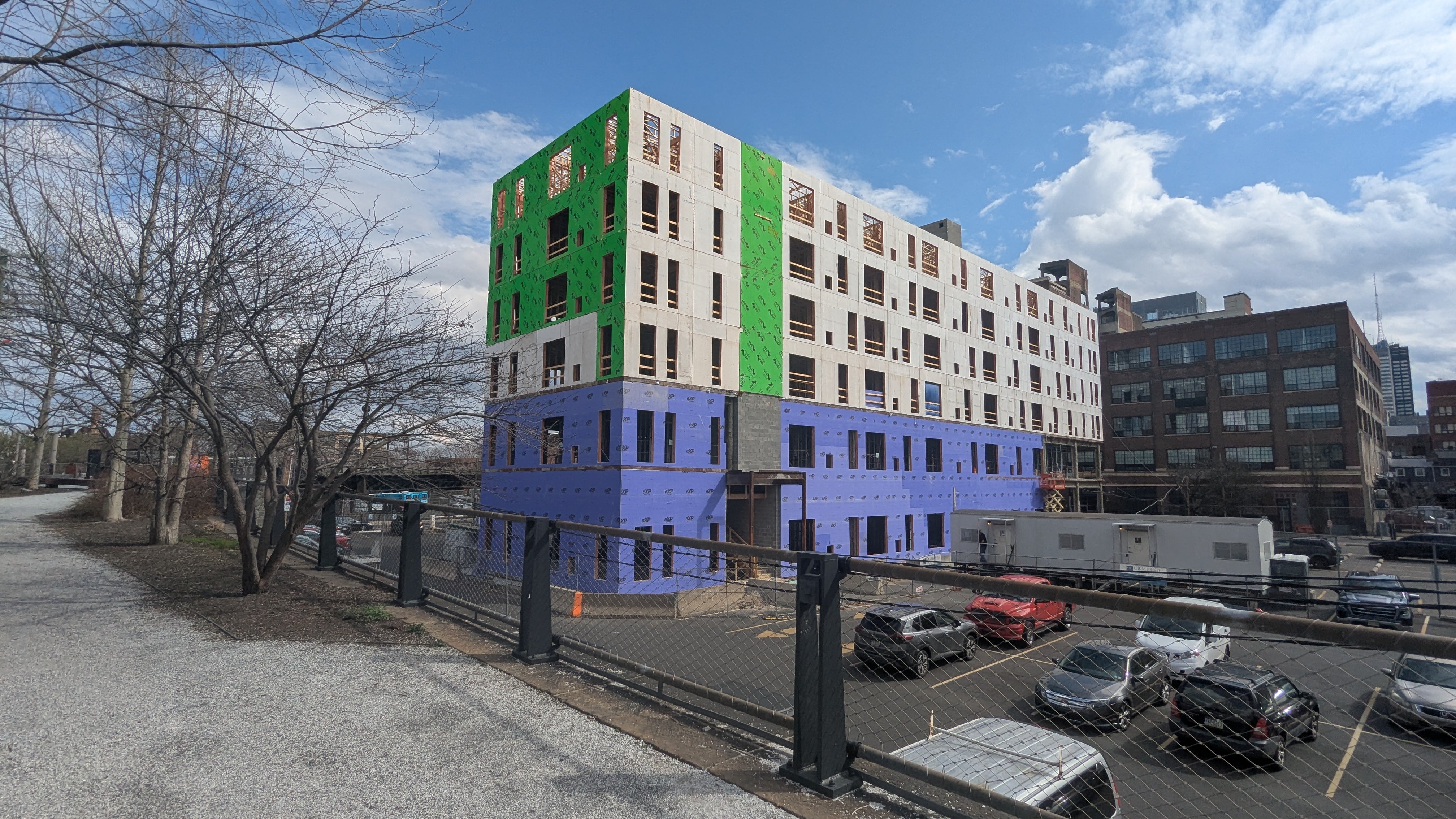
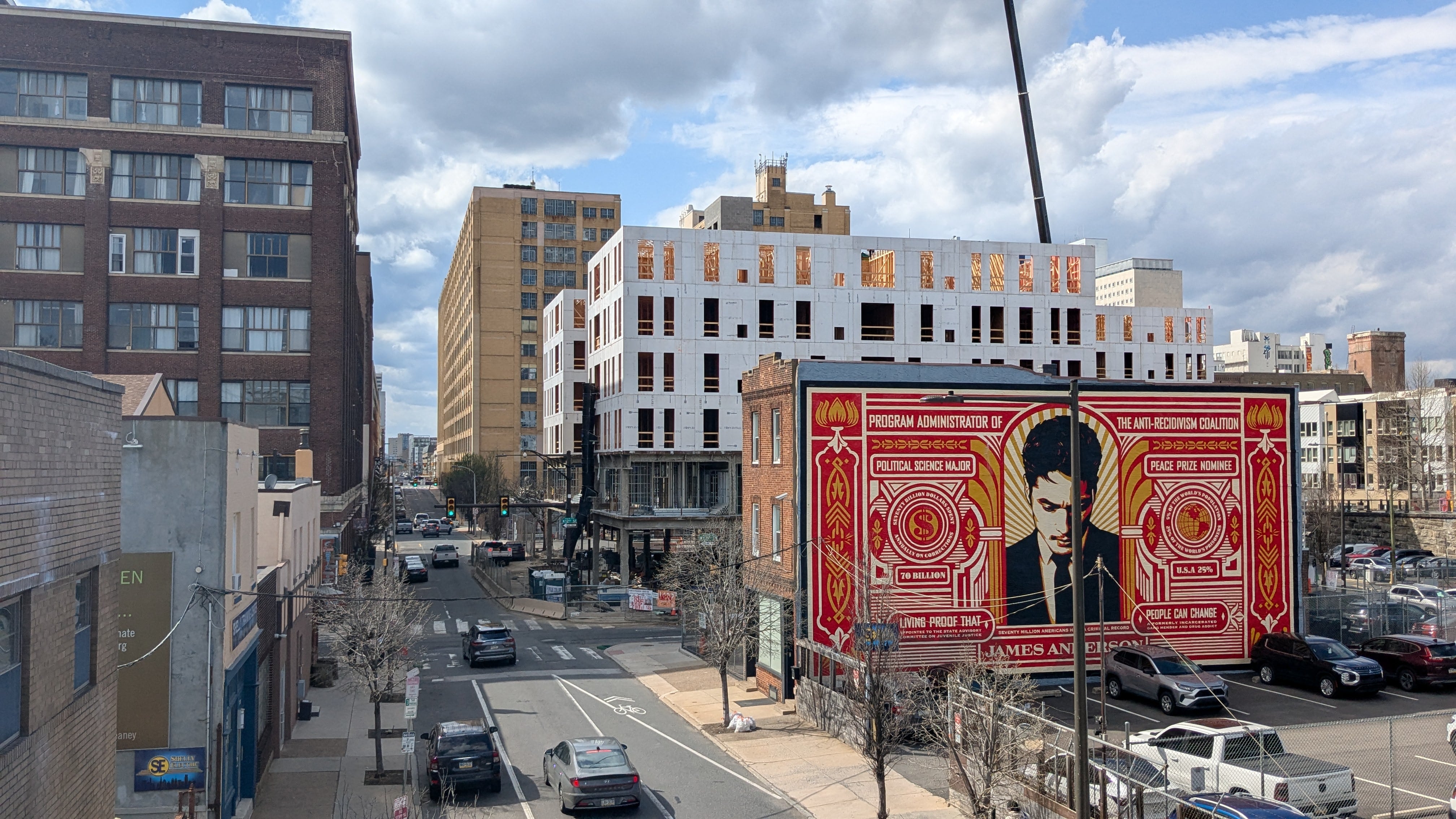
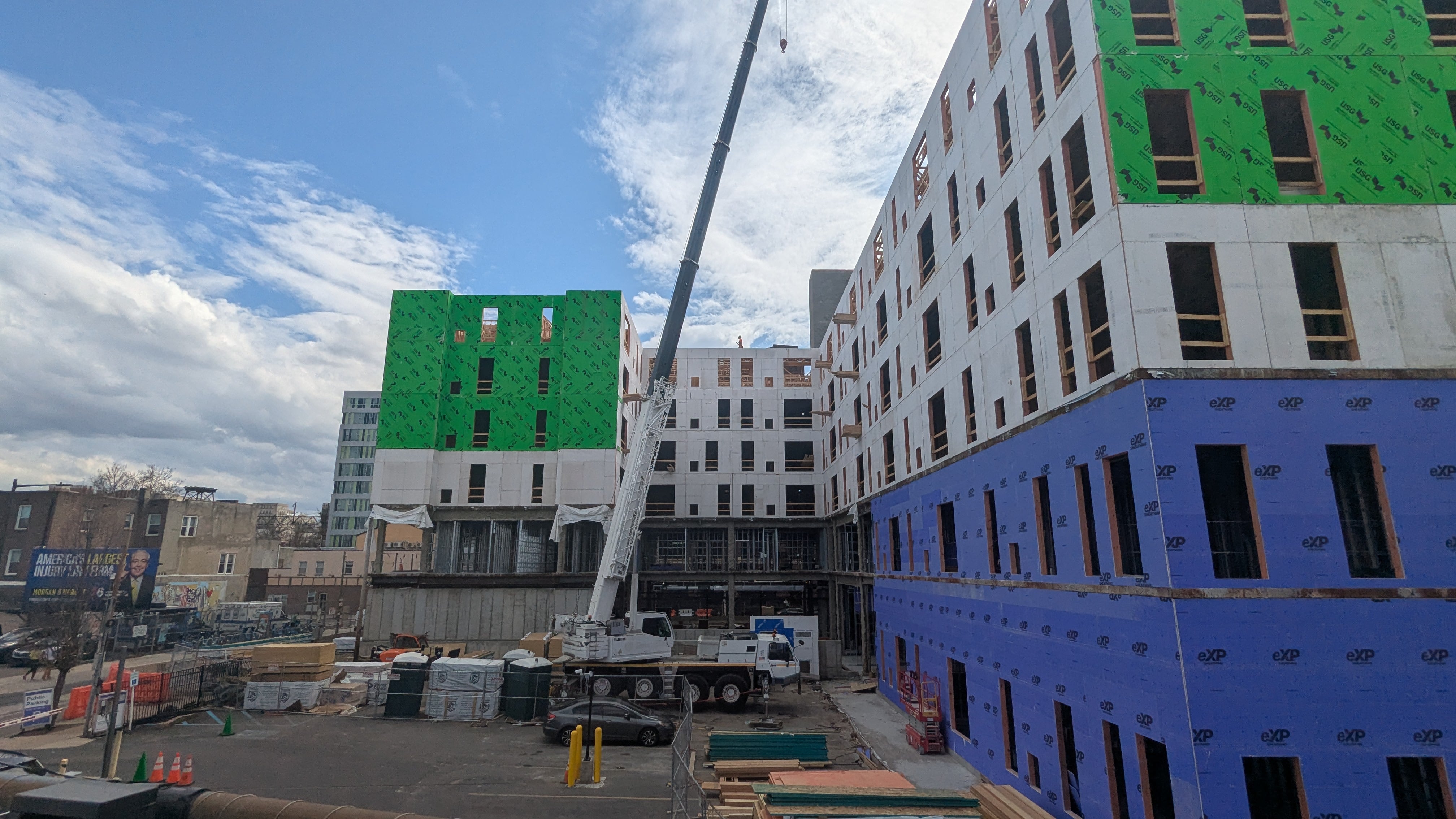
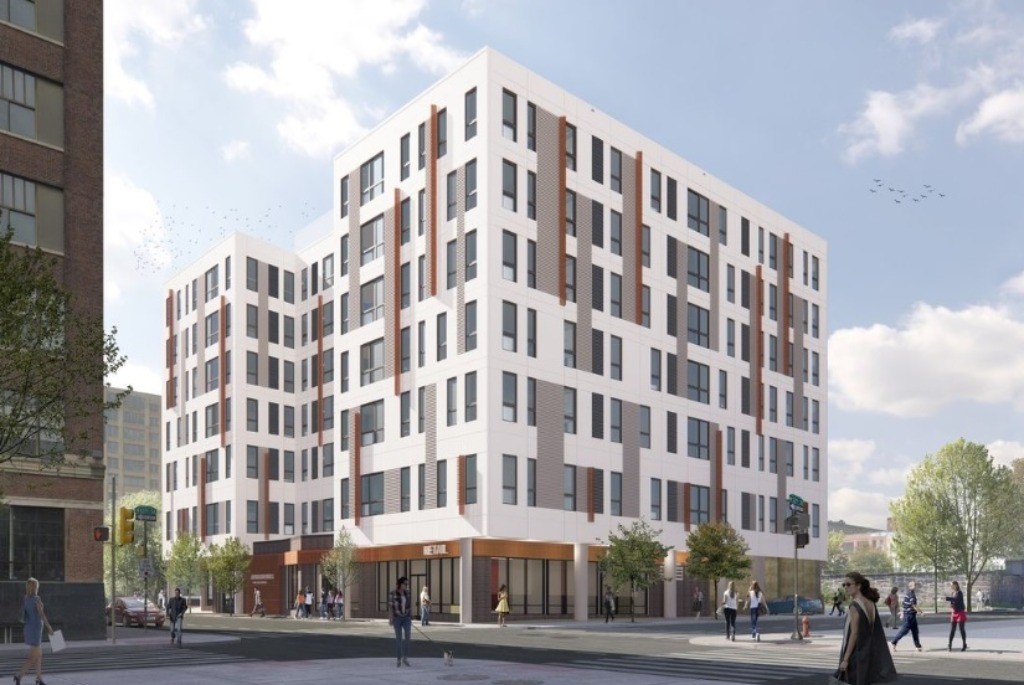
Framing was up to the sixth floor when we visited the property, so it’s going to be awhile before we can assess the completed facades of the building. Even at this relatively early stage, we’re fully confident the roof deck will have quite the view of the Center City skyline. And with an extension of the Rail Park planned and theoretically moving forward in the coming years, the vista in the other direction could be quite impressive soon enough too.
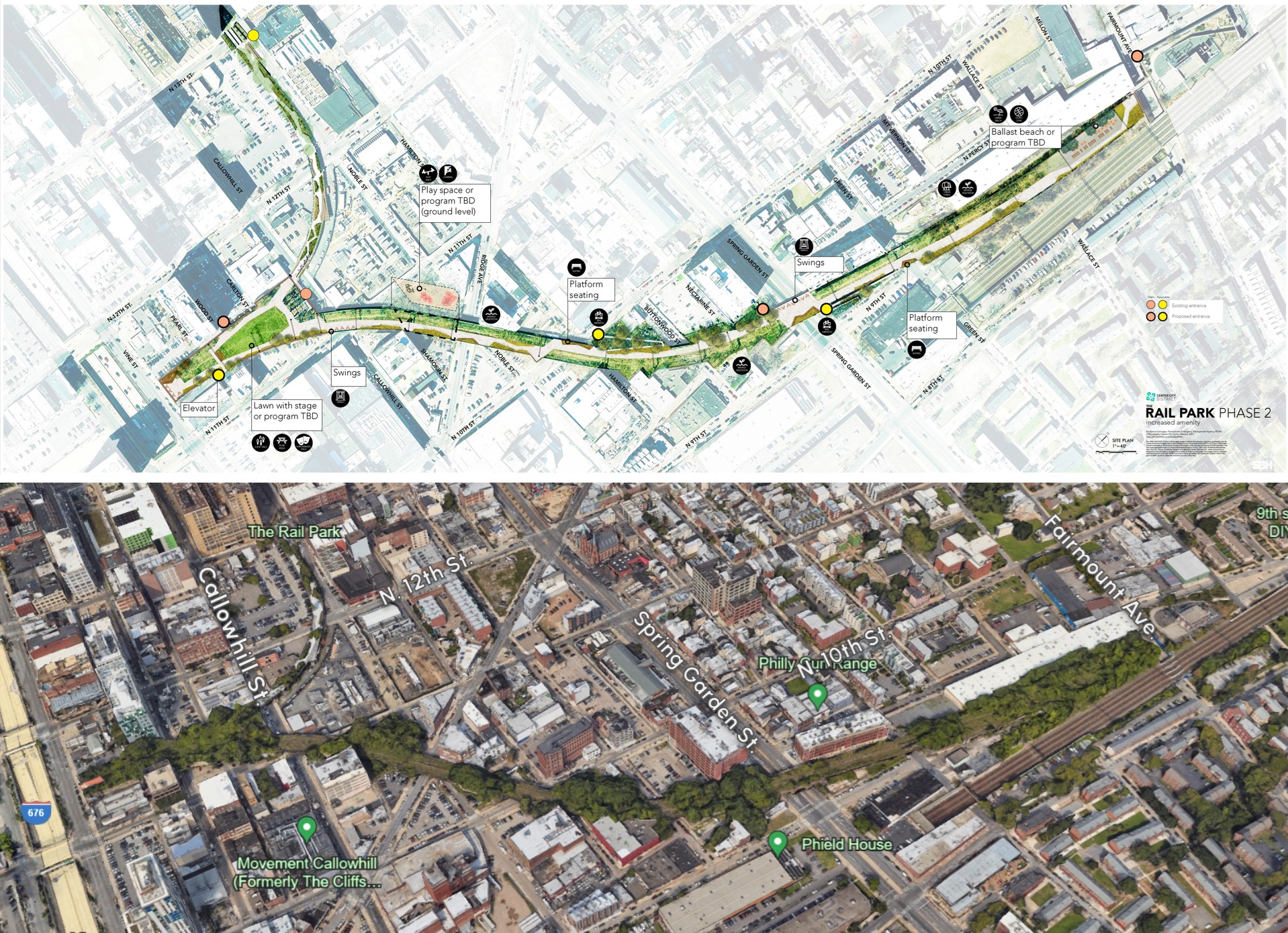
This seven-story building isn’t going to suddenly transform this formerly industrial neighborhood into Chelsea, but it will bring the comparisons to the High Line a little closer to reality. We’ve seen a number of new buildings rise in Callowhill over the last several years, and there are plenty of potential redevelopment sites on the surrounding blocks, so we should see a continuation of the neighborhood’s transformation in the coming years. It still won’t look like New York, but like most Philadelphians, we see that as a feature, not a bug.
Leave a Reply