
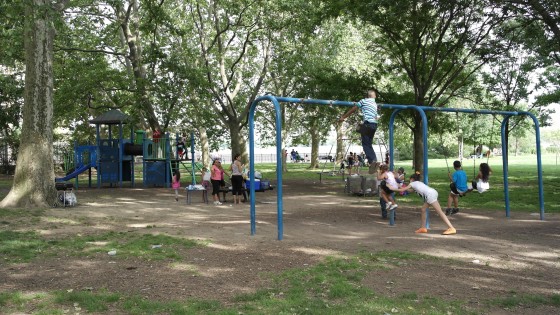
While new playground improvements are scheduled for Penn Treaty Park, the Fishtown waterfront park at Columbia and Delaware Avenue immediately north of Sugarhouse, the improvements are only part of a larger long-term redevelopment plan envisioned for the park where William Penn signed a treaty with the Lenni-Lenape Indians in the seventeenth century.
And while plans are moving forward to modernize the playground on the northern edge of the park, they will lack the kind of creativity and innovation suggested in the Penn Treaty Park Master Plan completed by Studio Bryan Hanes in 2009, in collaboration with the park’s friends group.
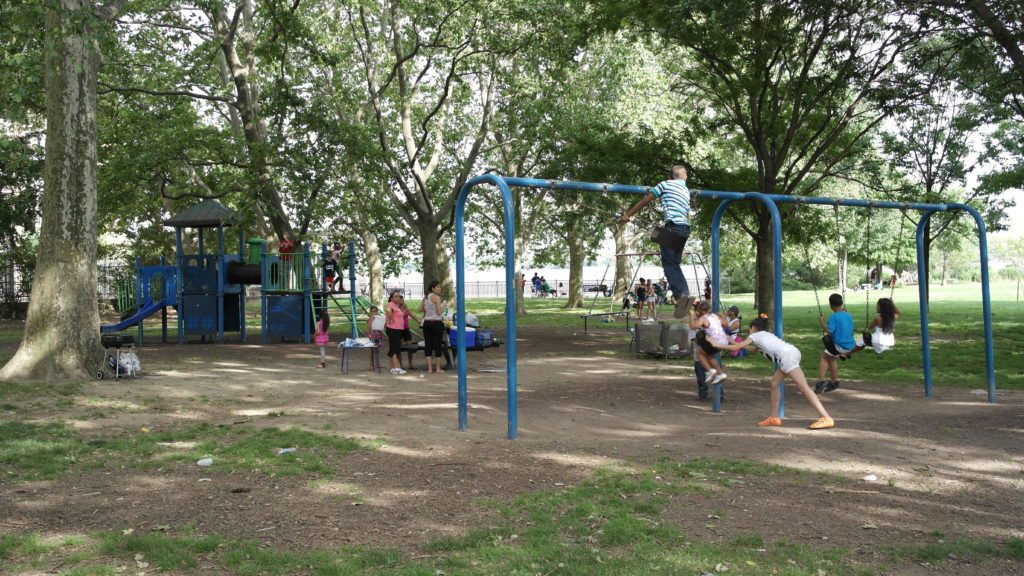
The playground
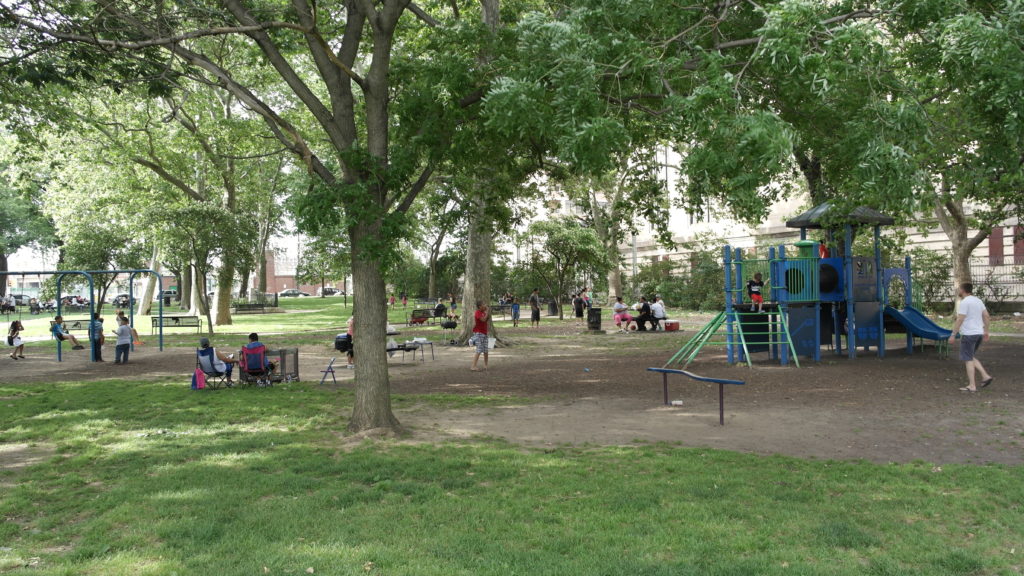
Another look
A few years ago, Hanes was contracted to embark on an early-action plan for a redevelopment of the park with the goal of installing quick fixes like new benches and lighting. This was before the Delaware River Waterfront Corporation developed its master Plan for the Central Delaware, an extensive long-term vision that encompasses the majority of Philadelphia’s waterfront.
But when that planning process started, “a much bigger plan emerged,” said Bryan Hanes, the architect that designed the Penn Treaty Park Master Plan. And so the early action plan evolved into a long-term master plan that set the model for the community process of waterfront redevelopment used for projects like the Race Street Pier.
“It was a much richer community engagement I think than the city was used to,” said Hanes.
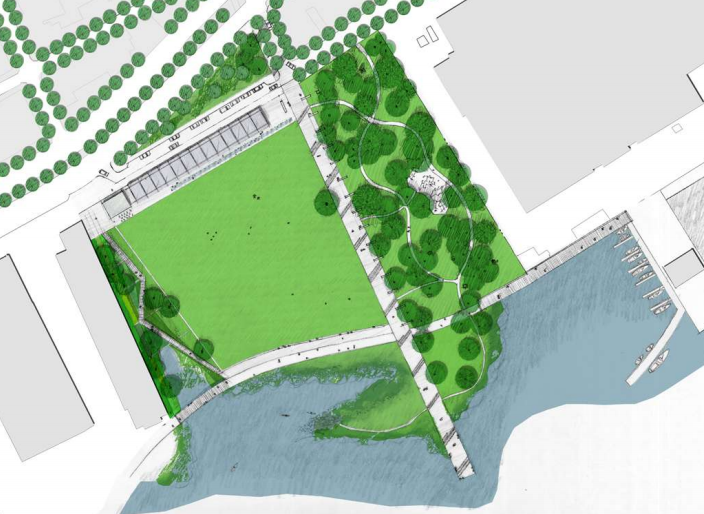
One vision of the park
The result was a more than $8.5M plan that envisioned a Penn Treaty Park redevelopment fabricated in four phases, with each phase broken down into the directional correlation of the park. The north phase envisioned an improved playground featuring traditional and innovate elements like solar LED lights. According to Friends of Penn Treaty Park President A.J. Thomson, the friends now have a few funding commitments in place for improvements, including from the City and Penn Treaty Special Services District. The play area could be refabricated by next spring, according to Thomson. According to Hanes, the City has earmarked $300K for that project. The vision in his master plan totaled around $485K. Hanes is concerned the City will come in and build a fast park that lacks the innovative features suggested in the master plan.
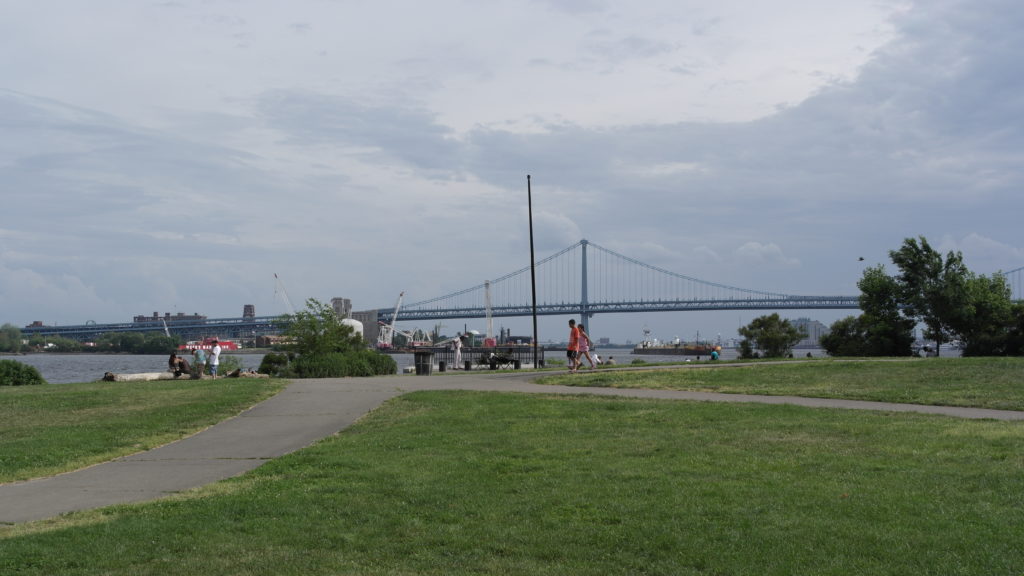
The park now
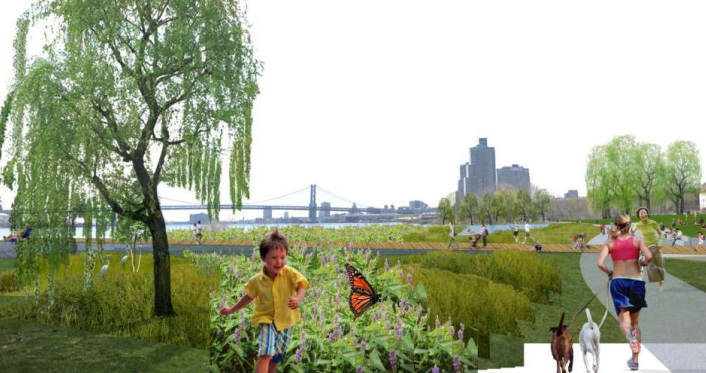
Someday perhaps
Hanes remains excited, however, about other aspects of the master plan that could be somehow included within the next year in coordination with a Sugarhouse expansion that includes riverfront improvements. That includes the $600K south edge, where Hanes envisioned a filtered procession of rain gardens that could provide stormwater infrastructure before this part of the park reaches the east edge of the park. Here, the master plan envisions a soft edge where individuals can put their feet in the water where the park meets the river. A redesigned soft edge would mean rocks and vegetation at the edge of the park. Right now, there is a soft edge but it would be improved. The $4.5M west edge, along Delaware Avenue is a part of the plan that’s maybe a decade or two away and dependent on increased River wards destiny, according to Hanes. It envisions a water feature and a café with outdoor seating.
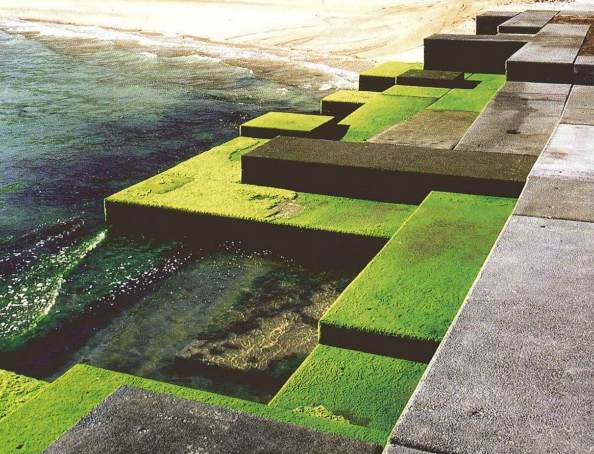
The soft edge idea
While the projects seems far reaching, Hanes thinks with the current Sugarhouse planning, good outreach and planning could mean thee of the four phases are realized within the next few years. For now, the City is poised to rebuild the playground in the north phase of the park. There is also the current construction of the Columbia Avenue Connector and the now underway planning process for the Spring Garden Connector which will improve community access to the river and include artsy elements. There’s investment down along the River, including plans for a mixed-use entertainment project across from Sugarhouse at Frankford and Delaware Avenues, and Penn Treaty Village. These are all indications the waterfront is primed for serious growth in the years to come.
–Lou Mancinelli
Leave a Reply