

Cultivate community pride. Strengthen civic groups. Engage the youth. Hire artists. Create green spaces. These could be part of any neighborhood’s plan. More specifically, these are some of the key elements that residents in the communities that compile Lower Lancaster Avenue voiced during a 10-month planning process last year hosted in collaboration with the People’s Emergency Center (PEC).
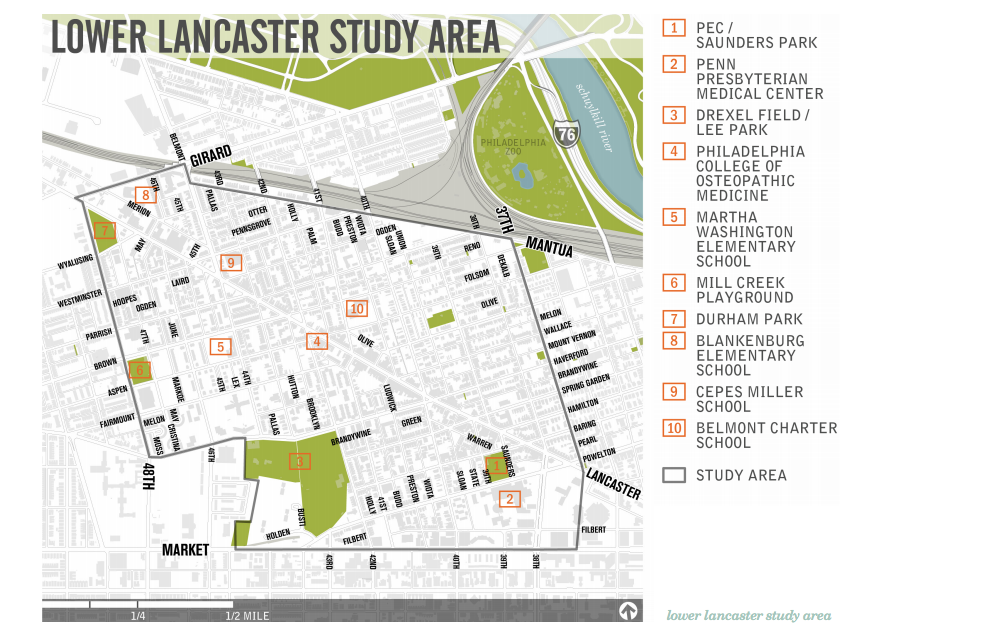
That result of that process is a study of more than 600 acres where reside around 18,000 people centered around a one-and-one-half mile stretch of Lancaster Avenue, according to the Lower Lancaster Revitalization Plan, published in April of this year. The study refers to Lower Lancaster as the area bordered by Market Street on the south, 48th Street on the west, the rail line/Mantua Ave on the north and 37th Street on the east. It includes the West Powelton, Saunders Park, Mantua, Belmont and Mill Creek neighborhoods. The study is something of a revisiting of a 2004 plan of the area conducted by PEC and the Delaware Valley Regional Planning Commission, funded by the William Penn Foundation. The current study is funded by the Wells Fargo Regional Foundation.
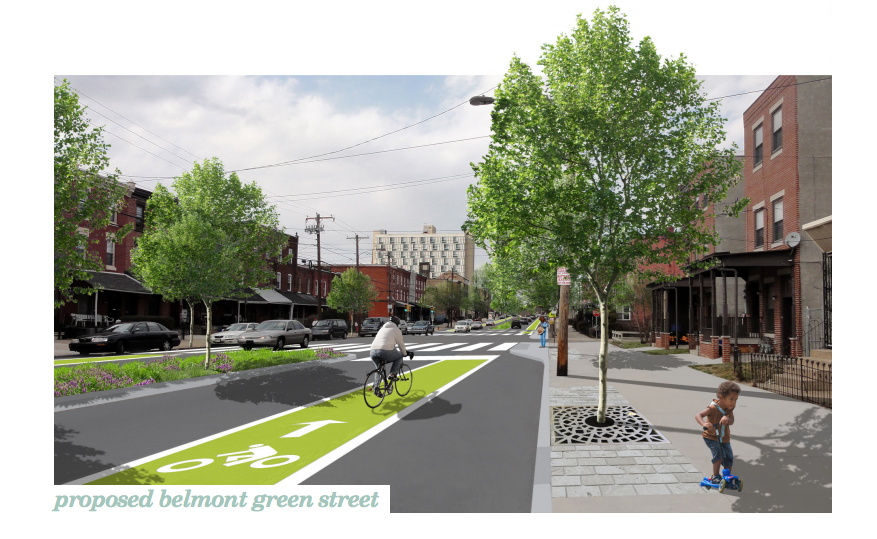
A greener future?
“The process of revitalization is about reinvesting in both people and in place,” the study says. “This resident-driven plan is focused on improving our quality of life and planting the seeds for a broader transformation to improve our parks, schools, housing and, at the center of it all, Lancaster Avenue.”
The report stressed the importance of coordinating with ongoing initiatives like We are Mantua! and the West Philadelphia Sustainable Communities Initiative. It also introduced the idea of Wiota Green, a 32-unit green townhouse development with single family infill housing, community garden and private play place.
For each element of the plan, the report also introduces a “here’s how” paragraph. Here’s how to improve the integral need for housing: Market the neighborhood as a great place to call home. Encourage employees of educational institutions to buy a home in Lower Lancaster. Promote infill development for a range of income levels. Build and retrofit with green technology. Discourage front-loading garages in new construction. Encourage rental and multifamily housing along Lancaster. Link local development and rehabilitation to job creation. Support transit-oriented development near trolley lines and subway stations.
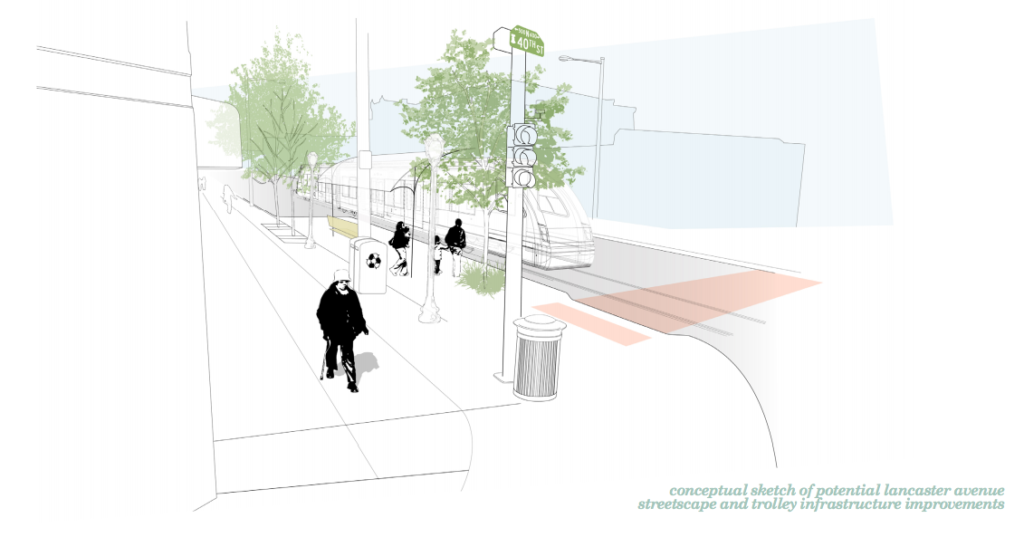
Rendering of possible streetscape improvements on Lancaster Ave.
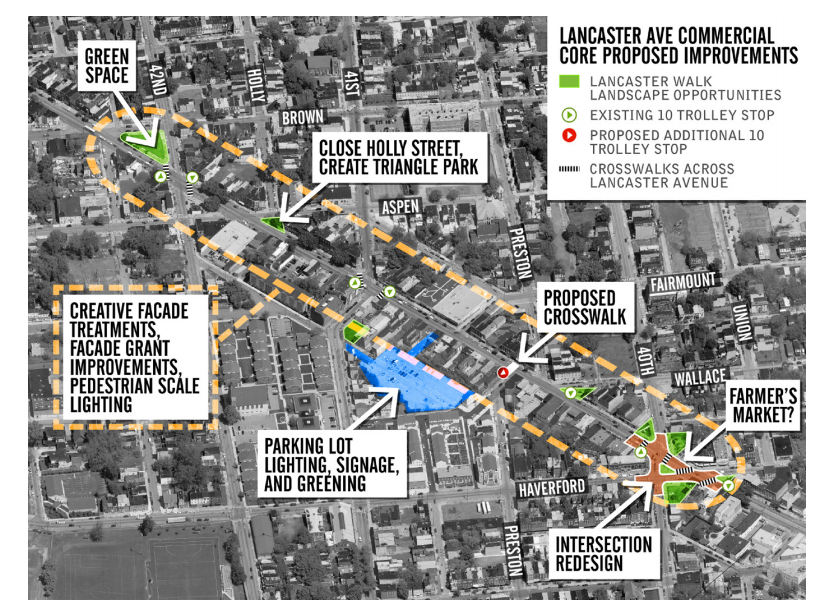
Several ways to improve the commercial corridor
While this is not directly related to Phila2035, as planning for that initiative continues across the city, we can expect to see similar plans evolve for almost every neighborhood. As we move forward, we can guarantee that sustainability will present an important goal, in contrast to, say, fifty years ago. Makes us wonder what planners will be focusing on decades in the future.
–Lou Mancinelli
Leave a Reply