
A reader reached out recently, wondering about 5001 Baltimore Ave., home to a large but dilapidated church that has needed steel support beams since before Covid. There’s quite a bit of history associated with this building, with a mix of drama and intrigue in recent years. First though, let’s look way back, over a hundred years, to this building’s construction.
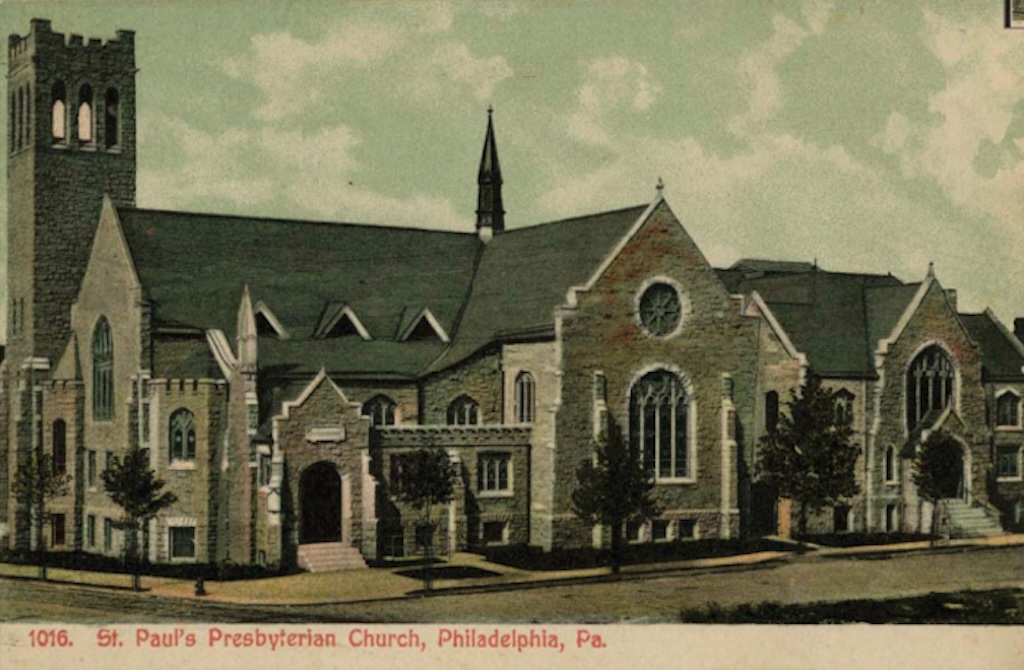
Saint Paul’s Presbyterian Church was designed by Isaac Pursell, a Philadelphia-based architect of the late 1800s and early 1900s who designed several historic religious structures of the time. This particular church was constructed in 1901 and expanded in 1905, all in the Gothic Revival style. After close to seventy years, Saint Paul’s sold the building to Hickman Temple AME Church, which had a prominent role in the local community over the following decades but was forced out of the building in 2017 due to structural issues. They eventually sold the building to Emmanuel Christian Church in 2022.
After the sale, the new owners started doing illegal interior demolition work, which included the removal of two prominent stained glass windows. According to Hidden City, those stained glass windows were Tiffany glass dating back to 1904, and were worth a combined $200K despite being sold to a local architectural salvager for six thousand dollars. This work resulted in the church being added to the local Historic Register in 2023. More recently, the building has landed in receivership, getting listed for sale earlier this year for $1.5M.
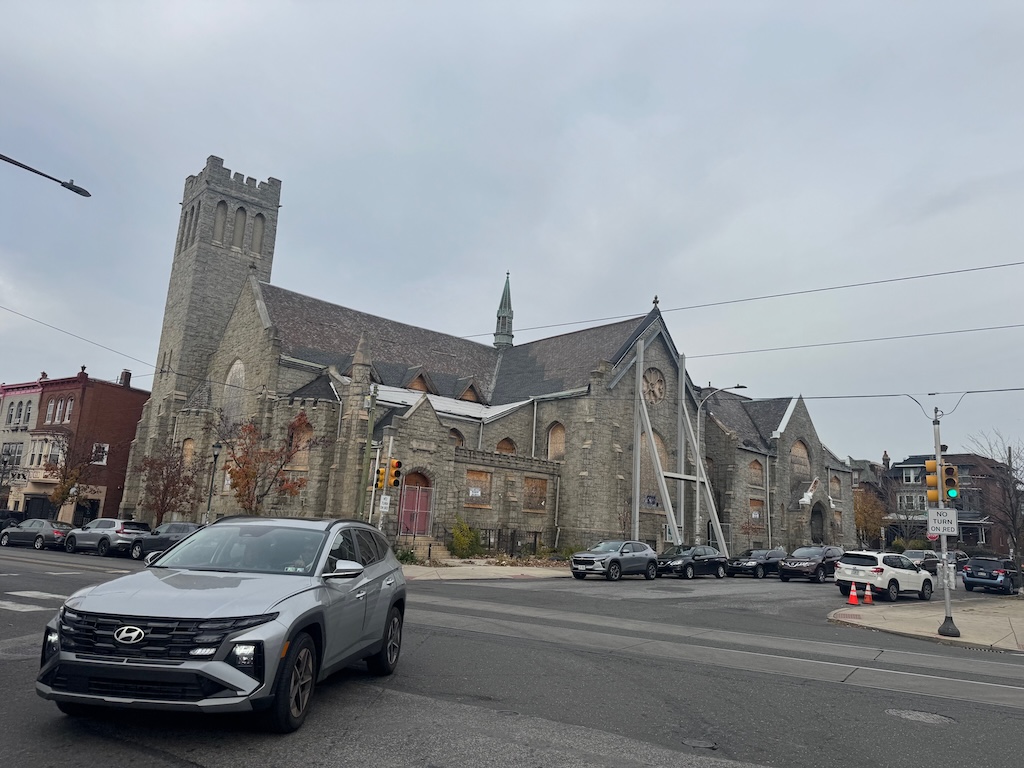
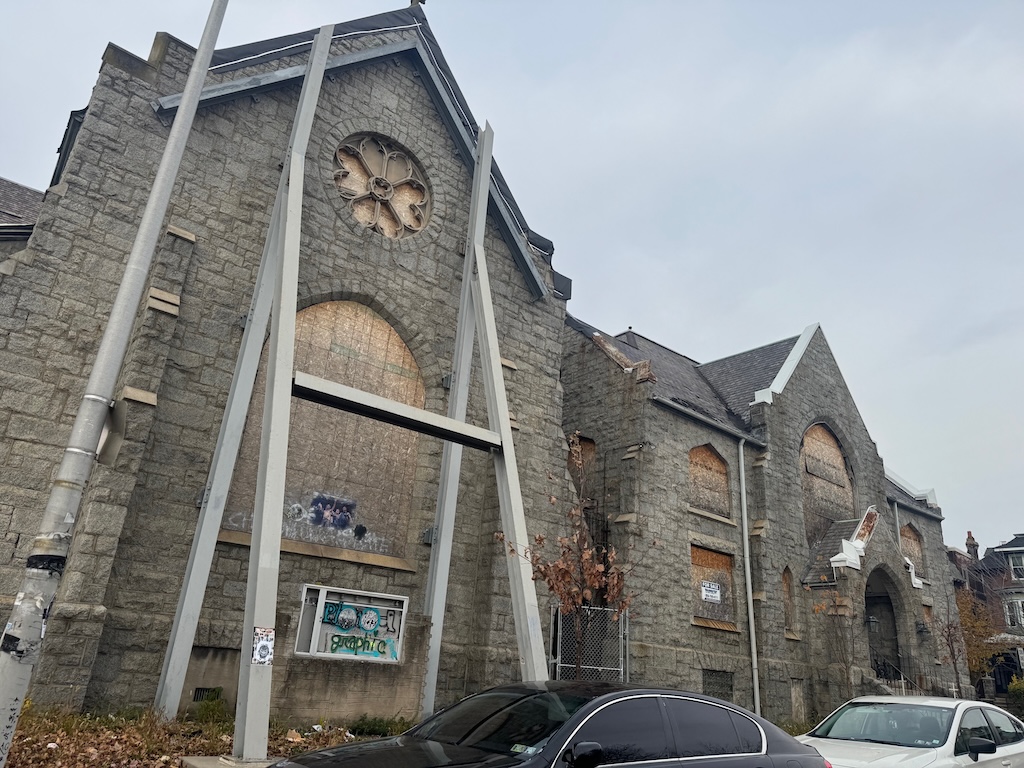
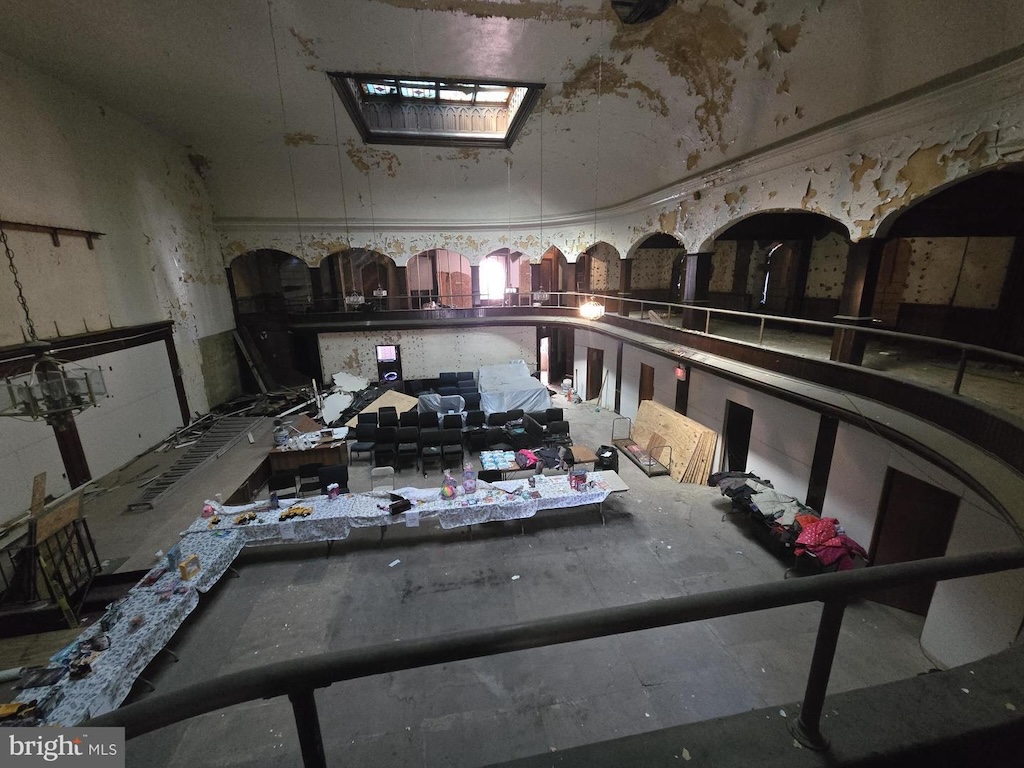
Despite the outstanding location on Baltimore Avenue across from Cedar Park, that price was never going to fly. Back in October, the property went under contract at a reduced $500K list price, though we would expect the final price will end up a bit lower. As for what’s next, we can only speculate.
Ideally, the new owners will have the funds to bring this handsome edifice back to life, possibly as a church or some other kind of gathering space, but more likely as a residential conversion. But not so fast! This property is zoned for single family homes for some reason, so any multi-family project would also need a variance from the ZBA before it can move forward. Assuming there’s some affordability component, we can see the community and the local councilmember being on board with such a plan.
Another possibility is that the building is structurally compromised past the point of possible renovation. If that’s indeed the case, then the future owners would be able to get special dispensation from the Historical Commission to demolish the building. Ostensibly, such a plan would entail the construction of a new apartment building in its place. But again, the property is zoned for single family homes, so this plan would also require a variance. And getting a variance for such a project would likely be a heavier lift, after demolishing a historic church. We don’t imagine a developer would be interested in that amount of risk, which leads us to the prediction that whoever is buying the building is doing so with an eye toward renovation, not demolition. And if that’s indeed the case, it would be a win for historic preservation and coup for the Baltimore Avenue corridor.
Leave a Reply