

Hermann J. Schwarzmann was a peculiar pick to design 34 structures for the Centennial Exhibition of 1876; as an unproved engineer, he had never designed a building before. But not to let this seemingly substantial inexperience stand in his way, he set to work designing and building structures to honor one of our country’s most important anniversaries. Two of the most notable structures that he designed were Horticultural Hall and Memorial Hall. Horticultural Hall was utilized as an elaborate greenhouse while Memorial Hall, the only building to still survive on the Centennial grounds, was originally deemed an art gallery building for the exhibition.
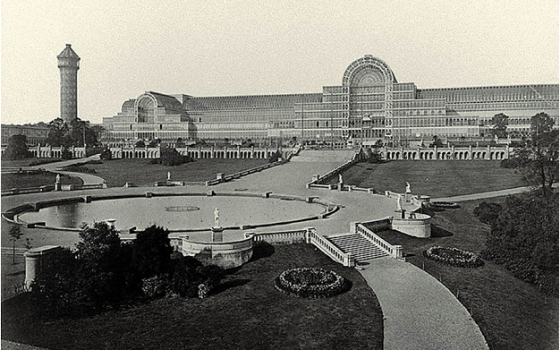
Horticultural Hall was erected upon a foundation composed of brick and marble, with a frame made of mostly steel and glass. For Schwarzmann, the distinctive exterior look he had given Horticultural Hall served as a tribute to the Crystal Palace from London’s own Great Exhibition, which had occurred in 1851. Additionally, the designer based the building’s style on ideas he had drawn from Moorish architecture – a term used to describe Islamic architecture common to northern Africa and Spain. Following the Exhibition, Horticultural Hall continued to exhibit plants until its demolition in 1954, due to damage incurred by Hurricane Hazel. This building took nine months to complete at a cost of about $250,000.
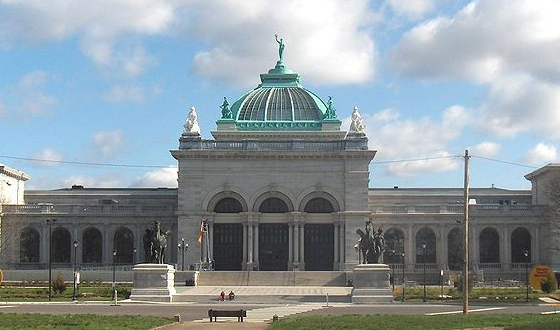
Memorial Hall was built using brick, glass, granite and iron at an original cost of $1.5M. After the Centennial it reopened in 1877 as the Pennsylvania Museum of Art. It was not until 1928 that the Museum of Art moved to its current location, and in 1938 that it adopted the name Philadelphia Museum of Art. Memorial Hall still stands today, after $85M in reparations, as the Please Touch Museum, which opened its doors in 2008. —-Alex Graziano
Leave a Reply