
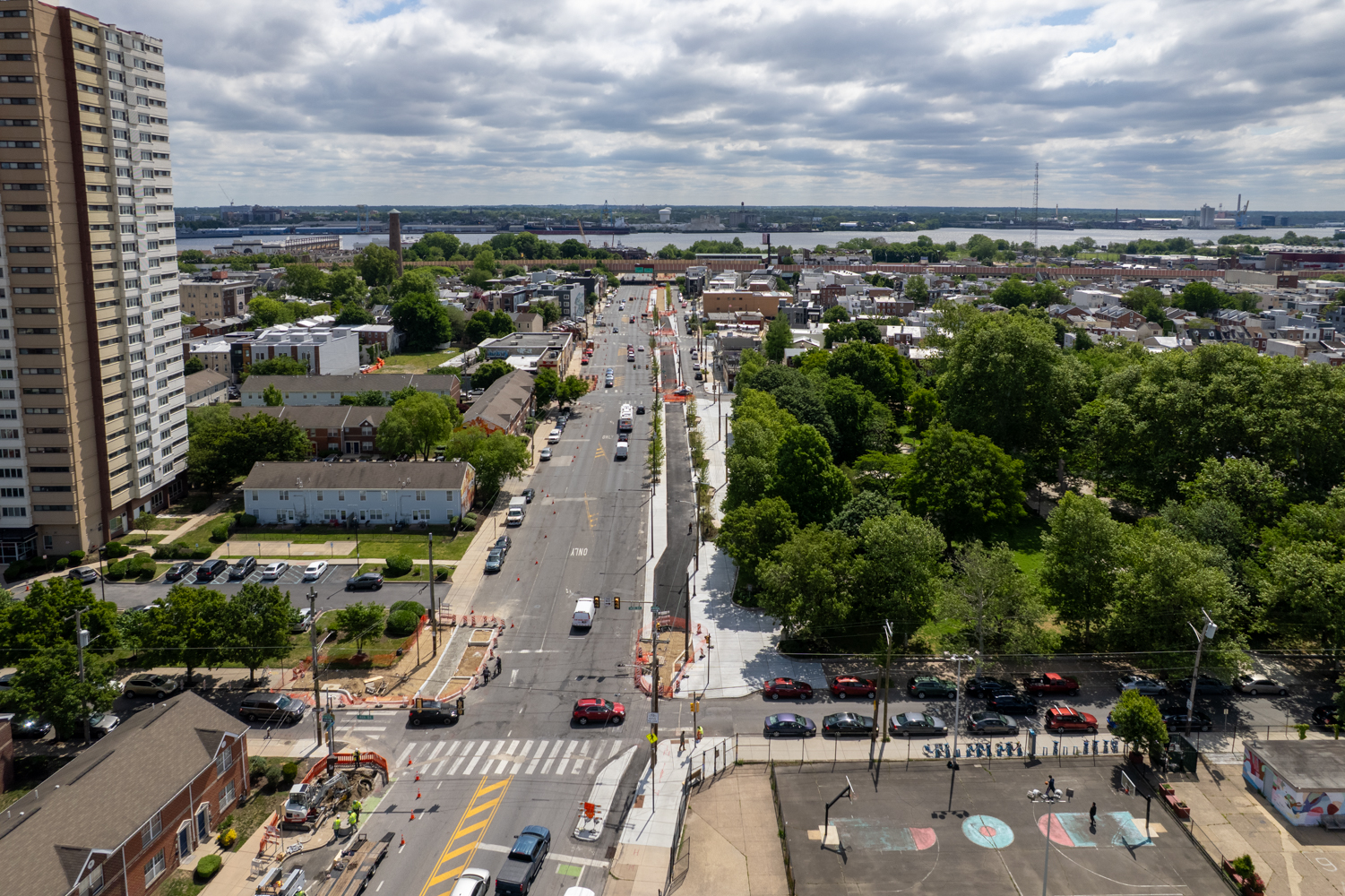
If you’ve driven east on Washington Avenue anytime over the last year or so, you’ve probably experienced at least one of the following: confusion, cones, rerouted lanes, or the fleeting thought that maybe this project would simply never end. But after years of planning and many months of construction-induced chaos, the Washington Avenue Connector is finally starting to look less like an elaborate traffic experiment and more like an actual transformation.
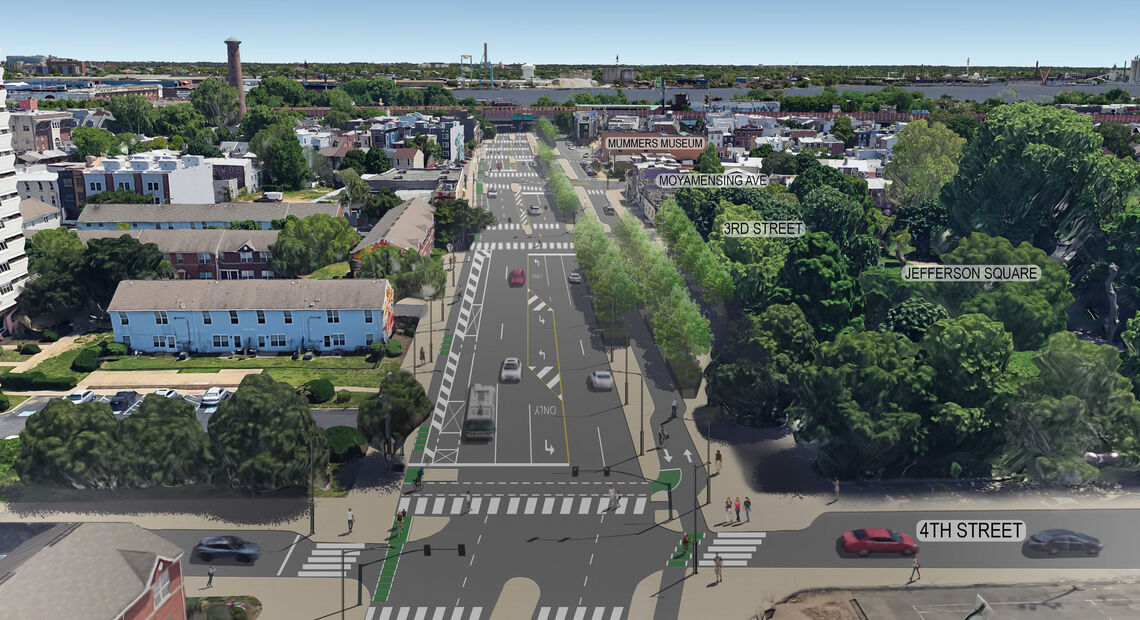
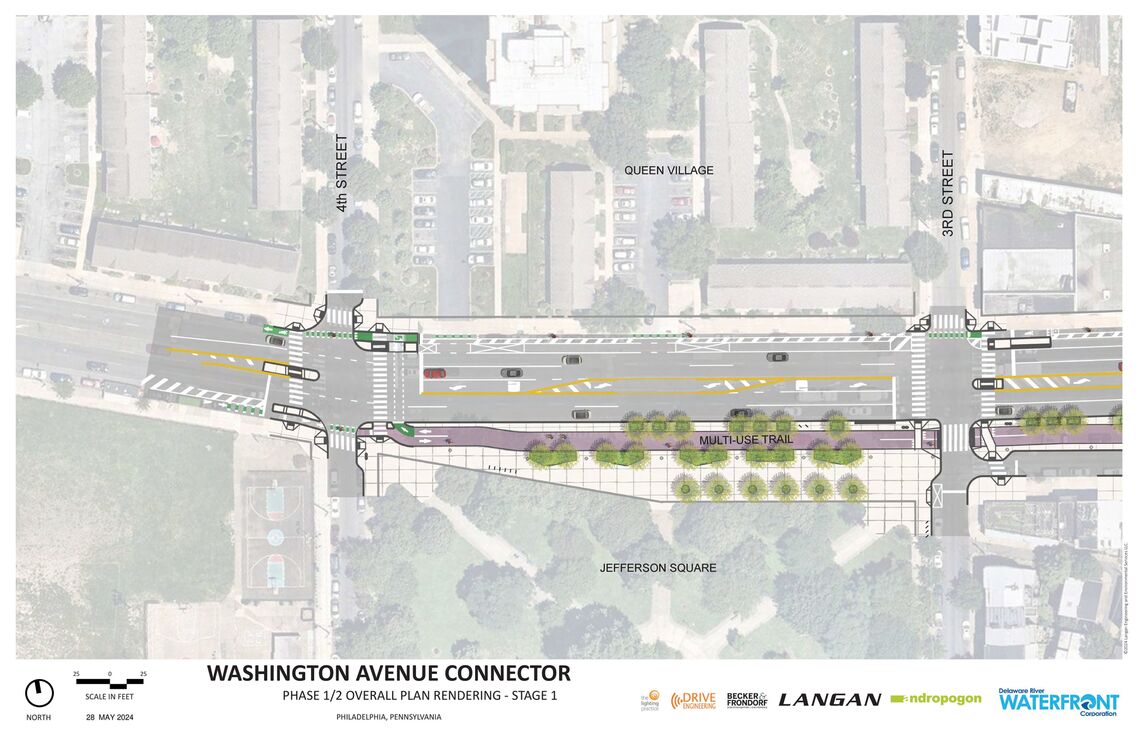
This long-discussed overhaul of the stretch between 4th Street and Columbus Boulevard is intended to do something Washington Avenue has historically struggled with: function as something other than a high-speed, industrial road through South Philly.
For decades, this corridor has been wide, awkward, and overwhelmingly car-centric, feeling more like infrastructure to survive than a neighborhood street to actually use. Now though, with major roadway work largely in place, the vision is becoming easier to see. Protected bike lanes, rebuilt sidewalks, curb extensions, upgraded crossings, and greener streetscape improvements are all gradually shifting the feel of the avenue from industrial leftover to legitimate connector.
The project has been under construction since last year and is expected to wrap up its major phases in 2026, with finishing touches and final adjustments likely carrying through the remainder of the year.
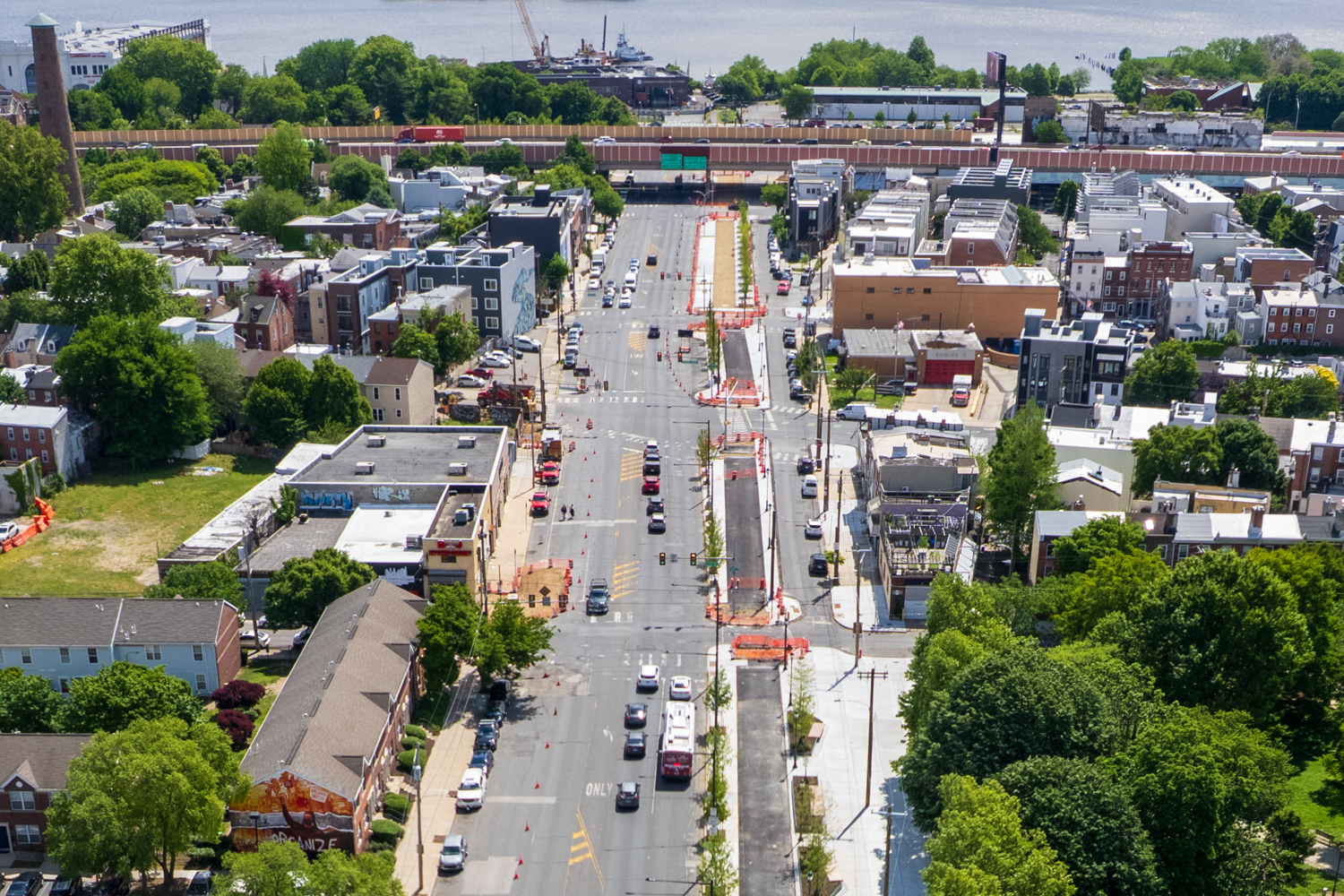
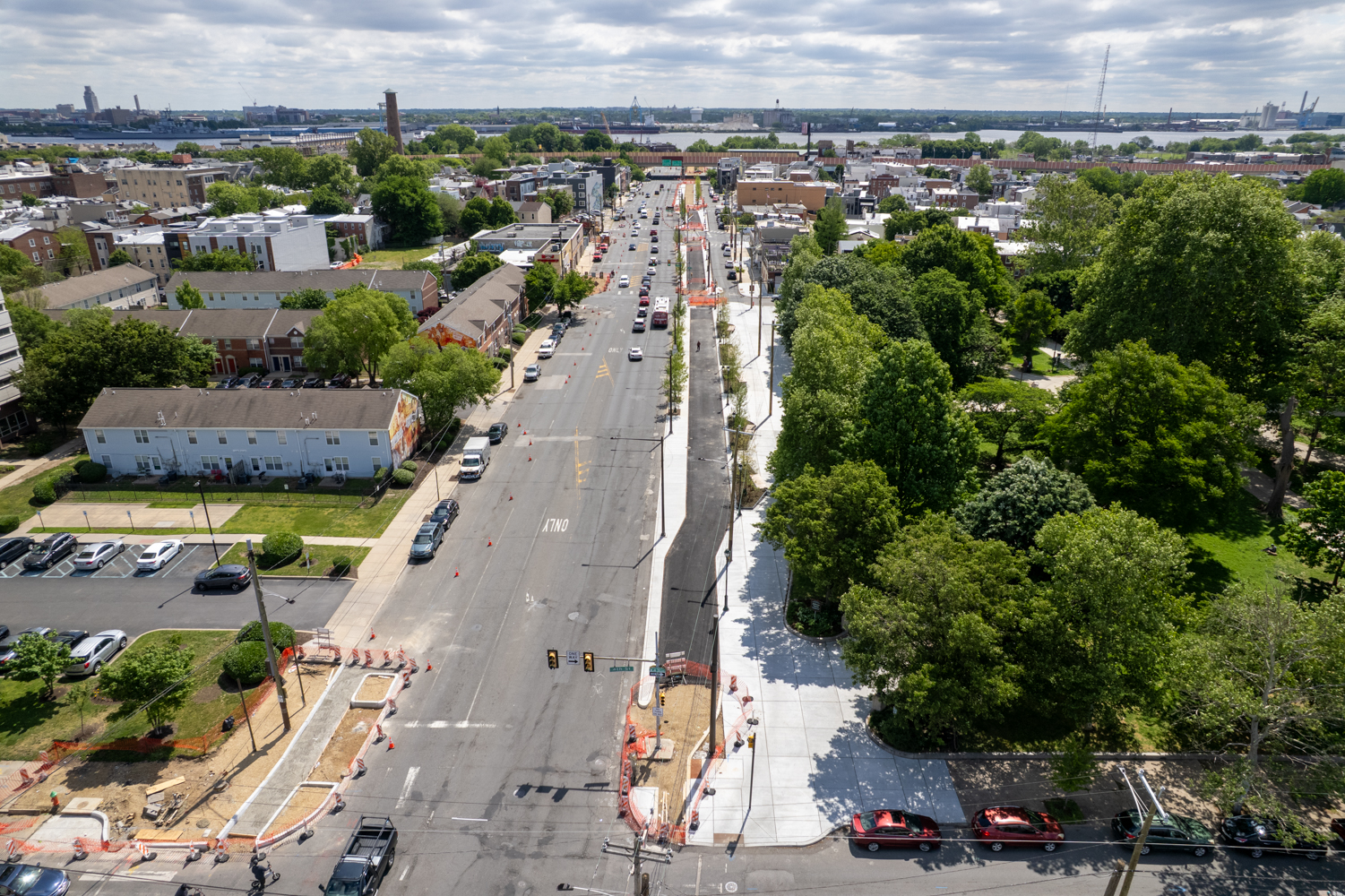
And while this may not be the sort of project that comes with flashy towers or dramatic skyline-altering renderings, its scale is arguably more impactful for daily life. Washington Avenue is one of South Philly’s most important east-west arteries, and changing how it functions could have ripple effects far beyond nicer crosswalks.
Safer pedestrian access, better bike infrastructure, and a more coherent route to the waterfront all stand to reshape how residents actually move through this part of the city. Sure, construction fatigue is real, and yes, there are probably still a few headaches ahead before the last cone disappears. But for perhaps the first time in a while, this thing actually feels like it’s heading somewhere.
Leave a Reply